
Tretinoin Cream
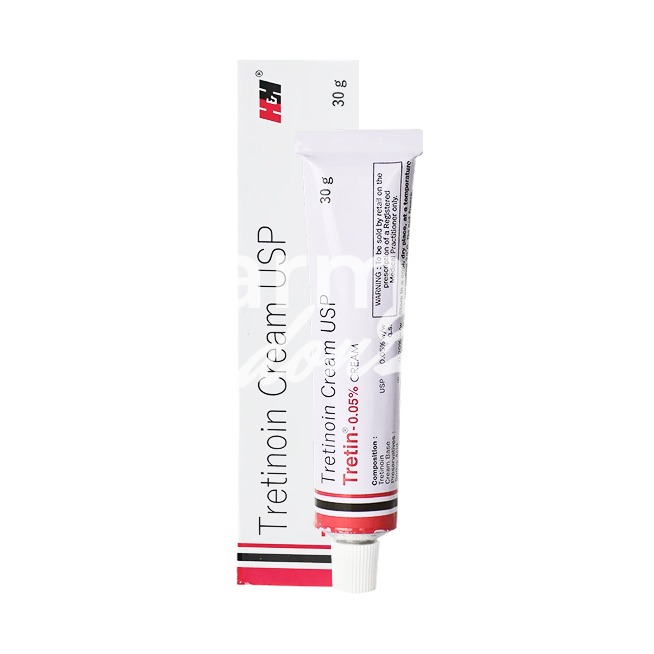
In brief
- Tretinoin cream is a prescription-only medicine (POM) in the UK.
- Tretinoin cream is used for the treatment of acne and is also used off-label for photoaging and fine wrinkles. It works by promoting skin cell turnover and preventing clogged pores.
- The usual dosage for topical application is to apply a thin layer once daily, typically at night, with strengths commonly of 0.025%, 0.05%, and 0.1%.
- The form of administration is a topical cream, gel or lotion.
- The onset time for noticeable results can vary, but users typically see improvement in their acne within 6–12 weeks.
- Continued use is necessary for sustained results.
- There are no specific alcohol warnings associated with topical application.
- The most common side effects include mild redness, peeling, dryness, and burning sensations.
- Would you like to try tretinoin cream without a prescription?
Basic tretinoin cream information
- INN (international nonproprietary name): Tretinoin
- ATC code: D10AD01
- Forms and dosages: Cream 0.025%, 0.05%, 0.1%; gel 0.01%, 0.025%, 0.05%; lotion 0.05%
- Registration status in the United Kingdom: Prescription-only medicine (POM)
- OTC / Rx classification: Prescription-only medicine (POM)
Everyday use and best practices
Tretinoin cream is a topical retinoid used mainly to treat acne. Use it exactly as directed by your prescriber.
Morning vs evening dosing
Tretinoin cream is usually applied in the evening, because it makes the skin more sensitive to sunlight.
To use it correctly, start by thoroughly cleansing your face. Once your skin is clean and dry, a thin layer of the cream should be applied directly to the affected areas.
Taking with or without meals
This is a cream for use on the skin, so it is not affected by meals and there are no dietary restrictions.
Safety priorities
Who should avoid it (MHRA warnings)
Tretinoin should not be used by people with known hypersensitivity to tretinoin or any of its ingredients.
Women who are pregnant or planning to conceive should also avoid it because of the potential risks associated with retinoid use. It should also be avoided on broken or sunburnt skin and in people with a personal or family history of skin cancer.
Activities to limit (driving, work safety)
Patients may experience side effects such as increased skin sensitivity and irritation while using tretinoin. Avoid direct sunlight and sunbeds where possible.
Use a sunscreen during the day to protect against heightened sun sensitivity.
Dosage and adjustments
General regimen (NHS guidance)
It is usual to start with a lower concentration, such as 0.025%, to assess skin tolerance before moving to a stronger one if needed.
Apply a thin layer once daily in the evening, to clean, dry skin, allowing the skin to adapt over time.
Special cases (elderly, comorbidities)
For elderly patients or those with existing health conditions, beginning with the lowest strength is advisable. They require careful monitoring to ensure that the treatment does not exacerbate pre-existing skin conditions, such as eczema or particularly sensitive skin.
These precautions reduce the likelihood of irritation.
What’s inside and how it works
Ingredients overview
Tretinoin, a form of vitamin A, is the active ingredient in tretinoin cream. It speeds up skin cell turnover. The cream also contains excipients that vary by product.
Mechanism basics explained simply
Tretinoin works by unclogging pores and promoting skin cell turnover, which helps to treat and prevent acne lesions. It can also reduce fine lines and improve pigmentation, although these are not licensed uses.
Main indications
Approved uses (MHRA listing)
Topical tretinoin is licensed in the UK for treating acne vulgaris.
Off-label uses in UK clinics
Outside of its primary indications, some dermatologists in the UK prescribe tretinoin cream off-label, for example for photoaging, uneven skin tone and hyperpigmentation.
Interaction warnings
Food interactions
There are no known food or drink interactions with topical tretinoin.
Drug conflicts
Tretinoin can interact unfavourably with other topical products that dry or irritate the skin, such as benzoyl peroxide, salicylic acid, abrasive cleansers and products containing alcohol. Tell your healthcare provider about any unusual side effects, which can also be reported through the Yellow Card scheme.
Alternative choices
For those who experience adverse reactions to tretinoin cream, alternatives are available through the NHS, for example:
- Adapalene: a topical retinoid that is generally considered gentler on the skin.
- Benzoyl peroxide or azelaic acid: non-retinoid topical options for acne.
Regulation snapshot
Tretinoin cream is regulated by the MHRA and is a prescription-only medicine (POM) in the UK, because of its potency and potential side effects.
Frequently asked questions
- Is tretinoin safe for long-term use? Extended use under healthcare supervision is generally safe, but it's wise to have regular check-ups.
- Can I use moisturiser while on tretinoin? Yes, moisturisers can help to reduce irritation.
- Is tretinoin cream available without a prescription? No – in the UK tretinoin cream is a prescription-only medicine.
- How long before I see results? Most individuals begin to notice improvements within 6 to 12 weeks of consistent application.
Guidelines for proper use
Pharmacist counselling style
Pharmacists provide clear guidance on:
- How to apply tretinoin effectively.
- Strategies to manage side effects.
NHS patient support advice
NHS resources are available to help patients understand what to expect during treatment, the typical duration of use, and when to seek additional medical advice if concerns persist.
| City | Region | Delivery Time |
|---|---|---|
| London | Greater London | 9–21 days |
| Birmingham | West Midlands | 9–21 days |
| Manchester | Greater Manchester | 9–21 days |
| Glasgow | Scotland | 9–21 days |
| Leeds | West Yorkshire | 9–21 days |
| Bristol | South West | 9–21 days |
| Liverpool | Merseyside | 9–21 days |
| Sheffield | South Yorkshire | 9–21 days |
| Newcastle | Tyne and Wear | 9–21 days |
| Nottingham | East Midlands | 9–21 days |
| Cardiff | Wales | 9–21 days |
| Brighton | South East | 9–21 days |
| Coventry | West Midlands | 9–21 days |
| Southampton | South East | 9–21 days |
| Norwich | East Anglia | 9–21 days |



