
Tetracycline
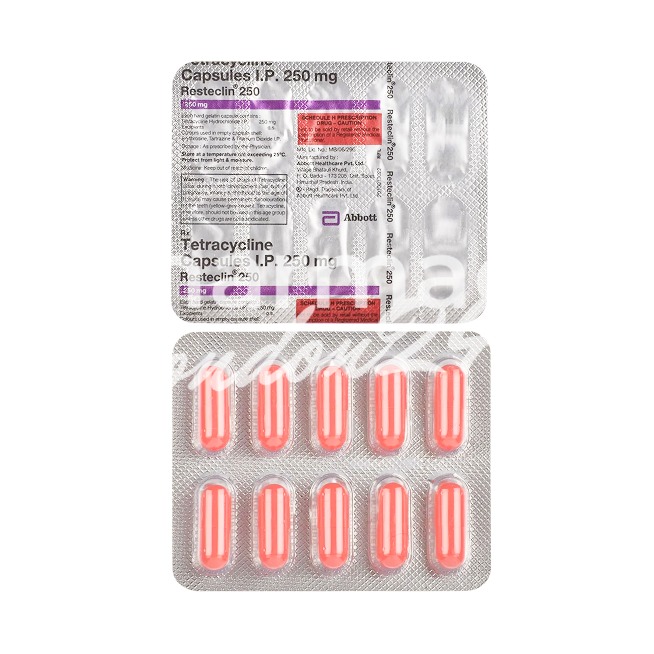
In brief
- Tetracycline is a prescription-only medicine (POM) in the UK.
- Tetracycline is used to treat a variety of infections, including respiratory and urinary tract infections, acne vulgaris, and certain sexually transmitted infections. It works by inhibiting bacterial protein synthesis, effectively stopping bacterial growth.
- The usual dosage for adults ranges from 250 mg to 500 mg taken orally every 6 hours, depending on the condition being treated.
- Tetracycline is administered orally as tablets.
- The onset of action typically occurs within 1-2 hours after oral administration.
- The duration of action can range from 6 to 12 hours, depending on the dose and form taken.
- Alcohol consumption should be avoided while taking tetracycline as it may increase the risk of side effects.
- The most common side effects include gastrointestinal disturbances, such as nausea and diarrhoea, as well as photosensitivity reactions.
- Would you like to try tetracycline?
Basic tetracycline information
- INN (international nonproprietary name): Tetracycline
- Brand names available in the United Kingdom: Generic tetracycline tablets
- ATC code: J01AA07
- Forms and dosages: Tablets 250 mg
- Manufacturers in the United Kingdom: Generic manufacturers
- Registration status in the United Kingdom: Prescription-only medicine (POM)
- OTC / Rx classification: Prescription-only medicine (POM)
Everyday use and best practices
Tetracycline works best when its dose timing and diet are managed carefully.
Morning vs evening dosing
Tips for taking tetracycline:
- For best absorption, take tetracycline on an empty stomach—at least one hour before meals or two hours after.
- Doses are usually spaced evenly through the day (for example every six hours), as directed by your prescriber, to keep levels in the bloodstream consistent.
- Take the last dose of the day at least an hour before lying down, with a full glass of water, to avoid irritation of the gullet.
Taking with or without meals
Food can greatly impact the absorption of tetracycline, particularly dairy products:
- Consuming dairy products, such as milk or cheese, within two hours of taking tetracycline can considerably reduce its absorption.
- Generally, taking tetracycline with a full glass of water helps ensure it reaches the stomach effectively.
- Avoiding calcium, iron supplements, and antacids around the time of ingestion increases the likelihood of the antibiotic being absorbed properly.
If many dairy products are consumed around mealtimes, take tetracycline either an hour before meals or two hours after, and keep to similar times each day.
Safety priorities
Tetracycline is an effective antibiotic for treating various bacterial infections, but it has restrictions. Know who should avoid it and what everyday activities could be affected by its side effects.
Who should avoid it (MHRA warnings)
Certain groups of people are strongly advised to avoid tetracycline. This includes:
- Patients with known allergies: If someone has ever experienced an allergic reaction to tetracycline or other antibiotics in the same family, they should definitely stay away from this medication.
- Pregnant or breastfeeding women, and children under 12 years: tetracycline can harm the developing baby and cause permanent staining and damage to developing teeth.
- People with severe kidney impairment: tetracyclines are generally avoided because the drug accumulates.
Activities to limit (driving, work safety)
Side effects such as dizziness or light-headedness can make it unsafe to drive or operate machinery. Tetracycline can also make skin more sensitive to sunlight, so protect your skin from strong sun. Recommendations include:
- Avoid driving: If feeling unsteady or dizzy, it's best to hold off on driving entirely.
- Limit hazardous work: Jobs that require sharp focus or physical coordination might need to be paused until you’re fully aware of how tetracycline affects you.
Monitor how your body responds and consult your healthcare provider if you have any concerns.
Dosage and adjustments
General regimen (NHS guidance)
For adults, the usual dose for infections is 250 mg orally every six hours, which can be increased to 500 mg every six to eight hours in severe infections. For acne vulgaris, which requires longer treatment, the usual dose is 500 mg twice daily. Follow the prescribed regimen exactly.
Special cases (elderly, comorbidities)
In the elderly, standard dosages are generally maintained, but kidney function should be monitored. Tetracycline is generally avoided in renal impairment because of accumulation, and many elderly patients take multiple medicines, so interactions need reviewing. For those with significant comorbidities, consult a healthcare professional for an individual treatment plan.
| City | Region | Delivery Time |
|---|---|---|
| London | Greater London | 9–21 days |
| Birmingham | West Midlands | 9–21 days |
| Manchester | Greater Manchester | 9–21 days |
| Leeds | West Yorkshire | 9–21 days |
| Glasgow | Scotland | 9–21 days |
| Cardiff | Wales | 9–21 days |
| Bristol | South West England | 9–21 days |
| Sheffield | South Yorkshire | 9–21 days |
| Newcastle upon Tyne | North East England | 9–21 days |
| Nottingham | Nottinghamshire | 9–21 days |
| Brighton | East Sussex | 9–21 days |
| Wolverhampton | West Midlands | 9–21 days |



