
Spironolactone
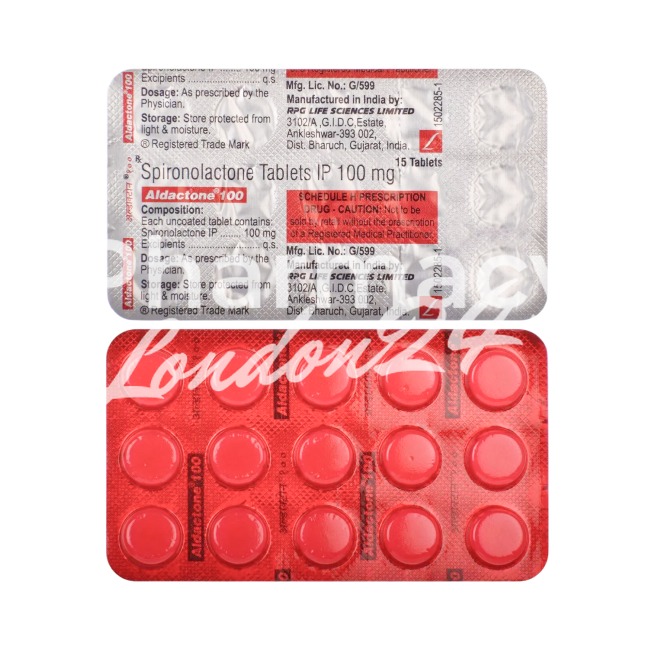
In brief
- In our pharmacy, you can buy spironolactone, with delivery in 9–21 days throughout the United Kingdom. Discreet and anonymous packaging.
- Spironolactone is intended for the treatment of conditions such as heart failure, hypertension and oedema. The drug acts as a potassium-sparing diuretic and an aldosterone antagonist.
- The usual dose of spironolactone is 25–100 mg, depending on the condition being treated.
- The form of administration is a tablet.
- The effect of the medication begins within 1–3 days.
- The duration of action is approximately 24 hours.
- Limit alcohol, as it can add to the blood pressure-lowering effect.
- The most common side effect is gastrointestinal upset, including nausea and vomiting.
- Would you like to try spironolactone?
Basic spironolactone information
- INN (international nonproprietary name): Spironolactone
- Brand names available in the United Kingdom: Aldactone; generic spironolactone
- ATC code: C03DA01
- Forms and dosages: Tablets (25 mg, 50 mg, 100 mg)
- Manufacturers in the United Kingdom: Pfizer and several generic manufacturers
- Registration status in the United Kingdom: Prescription-only medicine (POM)
- OTC / Rx classification: Prescription-only medicine (POM)
Everyday use and best practices
It's essential to understand how to use spironolactone effectively in daily routines. Patients often wonder about the best times to take this medication and its interaction with meals.Morning vs evening dosing
Dosing spironolactone at specific times can enhance its effectiveness and mitigate potential side effects. Taking it in the morning can help maximise diuretic benefits throughout the day, reducing the likelihood of nighttime urination. Some patients may prefer an evening dose, but it’s crucial to discuss this with healthcare providers. Regardless of timing, patients should adhere strictly to their doctor's advice for optimal results.Taking with or without meals
Spironolactone can be taken with or without food, but taking it with food can aid in reducing gastrointestinal discomfort. Practical tips:- Taking spironolactone with food can be beneficial, particularly for those who experience nausea.
- Establishing a routine, such as taking it at breakfast, can ensure consistency.
Safety priorities
The safety of spironolactone is paramount, and certain populations should avoid it. Understanding these factors can help prevent adverse effects.Who should avoid it
Some individuals must steer clear of spironolactone due to specific conditions. Those with:- Acute renal insufficiency
- Anuria
- Addison’s disease
- Hypersensitivity to spironolactone or its excipients
Activities to limit
Patients on spironolactone should be cautious with certain activities, especially those requiring full alertness. Dizziness and drowsiness can occasionally occur, impacting driving or operating heavy machinery. Very careful monitoring is recommended, particularly after starting treatment, to assess how the medication affects daily tasks.Dosage and adjustments
Adjusting the dosage of spironolactone is crucial based on individual health status and specific conditions treated.General regimen
The standard dosages for spironolactone vary based on the condition being treated:- For hypertension, doses typically range from 25 mg to 100 mg daily.
- Oedema cases often start around 100 mg daily, which can be adjusted based on the patient’s response.
Special cases
Certain populations need specific considerations regarding dosing. For instance:- Elderly patients may require lower starting doses to prevent side effects like hyperkalaemia or hypotension.
- Individuals with comorbidities should be closely monitored, particularly those with renal conditions, as these may alter the pharmacodynamics of spironolactone.
What’s inside and how it works
Ingredients overview
The primary ingredient in spironolactone is spironolactone itself, a potassium-sparing diuretic. In combination products, it may be paired with hydrochlorothiazide—a thiazide diuretic—to enhance its diuretic effects. Other formulations may include additional ingredients like lactose or starch as binders and fillers, ensuring the tablet’s integrity and bioavailability.
Mechanism basics explained simply
Spironolactone primarily functions as an aldosterone antagonist. This means it competes with aldosterone for receptor sites, blocking its effect on the kidneys. As a result, it helps eliminate excess sodium while conserving potassium. This mechanism is beneficial for conditions like heart failure or hypertension, as it helps to reduce fluid retention effectively and lower blood pressure.
Main indications
Approved uses (MHRA listing)
Spironolactone is licensed in the UK for several conditions, including:
- Heart failure
- Hypertension
- Oedema related to liver disease or nephrotic syndrome
- Primary hyperaldosteronism
Off-label uses in UK clinics
In clinical practice, spironolactone is sometimes prescribed off-label for conditions beyond its primary indications. One notable application is in treating acne, particularly in women, where it helps reduce sebum production and hormonal levels contributing to breakouts. Similarly, in cases of hirsutism, spironolactone can aid by reducing excessive hair growth by addressing underlying hormonal imbalances. These uses highlight the versatility of spironolactone within dermatology and reproductive health.
Interaction warnings
Food interactions (alcohol, tea/coffee)
Certain foods and beverages can interact with the effects of spironolactone. For instance, alcohol may exacerbate the drug’s potential diuretic effects, increasing the risk of dehydration and electrolyte imbalances. Potassium supplements and salt substitutes containing potassium should be avoided unless a doctor advises them.
Drug conflicts
Spironolactone has important drug interactions. One significant interaction is with ACE inhibitors, which can amplify potassium levels, leading to hyperkalaemia—a potentially dangerous condition. Other drugs, such as non-steroidal anti-inflammatory drugs (NSAIDs), may diminish spironolactone’s diuretic efficacy, necessitating careful medication management. Consulting healthcare providers regarding all medications, including medicines bought over the counter, is essential for safety.
Alternative choices
Alternatives to spironolactone prescribed by the NHS include:
- Eplerenone: A similar aldosterone antagonist with a favourable side effect profile, often leading to less hormonal interference than spironolactone.
- Amiloride: A potassium-sparing diuretic. It’s effective against hypertension but less potent for fluid retention. Side effects may include nausea and dizziness.
Patients should discuss these alternatives with their healthcare provider to determine the best fit for their medical needs and lifestyle.
Regulation snapshot
Spironolactone is regulated in the UK. The Medicines and Healthcare products Regulatory Agency (MHRA) oversees the approval process, ensuring that medications such as spironolactone meet stringent safety and efficacy standards. Spironolactone is classified as a prescription-only medicine (POM) in the UK, so it is dispensed only on a prescription.
The NHS has specific prescribing frameworks, aligning with guidelines to manage conditions like hypertension and heart failure. General practitioners (GPs) can prescribe spironolactone within clinically approved indications, while pharmacists provide essential counselling on its use. Continuous monitoring of patient outcomes and side effects is emphasised to ensure safe treatment paths.
Frequently asked questions
Here are some common questions patients often have about spironolactone:
- Can a GP prescribe spironolactone? Yes, GPs can prescribe spironolactone for various conditions such as heart failure and hypertension, and sometimes off-label for acne.
- What are possible side effects? Common side effects include dizziness, hyperkalaemia, and gastrointestinal upset. Awareness of side effects helps in managing treatment effectively.
- How should spironolactone be taken? It is generally taken once daily, often in the morning. Following the prescribed dosage is crucial.
- Is spironolactone safe long-term? When monitored correctly, spironolactone can be safe for long-term use. Regular follow-ups are important.
Guidelines for proper use
Pharmacists play a vital role in counselling patients on spironolactone use:
- Educate on timing: Taking spironolactone in the morning can help mitigate nocturia.
- Check for interactions: Advise on avoiding potassium-rich foods or supplements, as spironolactone may increase potassium levels.
- Monitor renal function: Routine blood tests to check kidney function and potassium levels are essential during treatment.
- Discuss side effects: Patients should be informed about potential side effects and advised to report any concerning symptoms.
The NHS also suggests patient support resources for guidance on lifestyle changes and dietary considerations to complement the medication.
| City | Region | Delivery Time |
|---|---|---|
| London | Greater London | 9–21 days |
| Birmingham | West Midlands | 9–21 days |
| Manchester | Greater Manchester | 9–21 days |
| Glasgow | Scotland | 9–21 days |
| Leeds | West Yorkshire | 9–21 days |
| Sheffield | South Yorkshire | 9–21 days |
| Bradford | West Yorkshire | 9–21 days |
| Bristol | South West | 9–21 days |
| Cardiff | Wales | 9–21 days |
| Coventry | West Midlands | 9–21 days |
| Nottingham | East Midlands | 9–21 days |
| Plymouth | South West | 9–21 days |
| Stoke-on-Trent | West Midlands | 9–21 days |
| Wolverhampton | West Midlands | 9–21 days |
| Derby | East Midlands | 9–21 days |



