
Ranexa
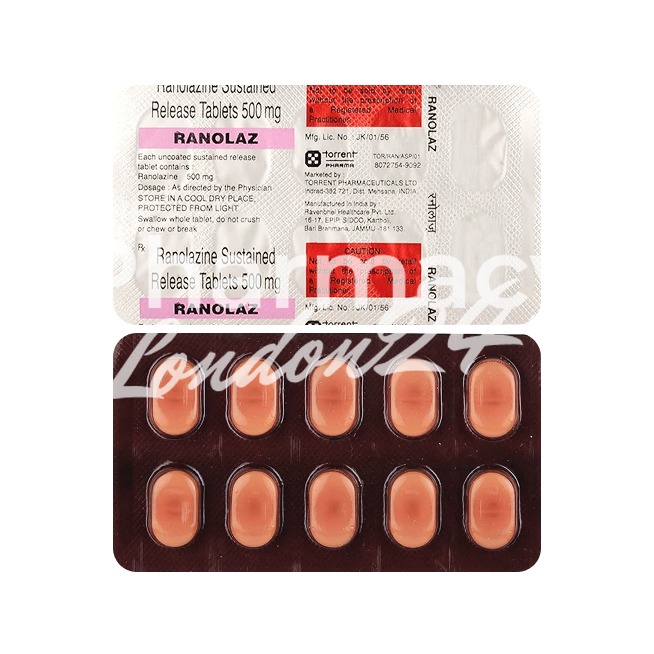
In brief
- Ranexa can be purchased in our pharmacy, with delivery in 9–21 days throughout the United Kingdom. Discreet and anonymous packaging.
- Ranexa is used for the treatment of chronic stable angina. The drug works by inhibiting sodium currents in cardiac myocytes, thereby reducing the heart's oxygen demand.
- The usual dosage of Ranexa is 375 mg twice daily, increased after 2–4 weeks to 500 mg twice daily and, depending on response, to a maximum of 750 mg twice daily.
- The form of administration is a prolonged-release tablet.
- The effect of the medication begins within 1–2 hours.
- The duration of action is approximately 12 hours.
- Alcohol should be consumed with caution, as it may increase the risk of side effects.
- Common side effects include dizziness, headache, constipation and nausea.
- Would you like to try Ranexa?
Basic Ranexa information
- International nonproprietary name (INN): ranolazine
- Brand names available in the United Kingdom: Ranexa; generic ranolazine
- ATC code: C01EB18
- Forms and dosages: prolonged-release tablets 375 mg, 500 mg and 750 mg
- Manufacturers in the United Kingdom: Menarini (Ranexa); Accord (generic)
- Registration status in the United Kingdom: licensed by the MHRA; prescription only
- OTC / Rx classification: Prescription-only medicine (POM)
Everyday use and best practices
A common concern for patients taking Ranexa (ranolazine) in the UK is how best to fit the medication into daily life. Understanding the right dosing times and the effect of meals can help patients take it regularly.
Morning vs evening dosing
Ranexa is taken twice daily, spaced approximately 12 hours apart, so the morning and evening doses fit well within a typical day. Consistency in timing helps maintain stable blood levels of the drug. Follow your prescriber’s instructions when establishing a routine.
Taking with or without meals
Ranexa can be taken with or without meals. Linking doses to meal times, for example taking one with breakfast, may help you to remember them. Swallow the tablets whole; do not crush, break or chew them.
What’s inside and how it works
Ingredients overview
Ranexa contains the active ingredient ranolazine, which acts as the active ingredient in its prolonged-release tablets. These are offered in strengths of 375 mg, 500 mg, and 750 mg. In addition to the active ingredient, there are various inactive components like fillers and binding agents that contribute to the formulation of the tablets, ensuring they work effectively and safely.
Mechanism basics explained simply
How does Ranexa actually work? The mechanism begins with inhibiting the late sodium current in cardiac myocytes—essentially helping to create a better energy balance in the heart muscle. This approach is particularly beneficial for those not responding to traditional antianginal therapies. In simple terms, Ranexa allows the heart to function better under stress, significantly reducing the instances of angina and improving overall quality of life.
Main indications
Ranexa, or ranolazine, is licensed as an add-on treatment for the symptomatic relief of stable angina pectoris in adults who are inadequately controlled by, or intolerant of, first-line antianginal therapies such as beta-blockers or calcium channel blockers.
Approved uses
Ranexa is licensed in the UK as an add-on treatment for chronic stable angina, providing additional support to existing angina management. The aim is to reduce the frequency of angina attacks and improve exercise capacity.
Off-label uses in UK clinics
Use of ranolazine for other conditions, such as arrhythmias, is off-label and remains experimental. It should only be considered by a specialist in a clinical context.
Interaction warnings
Caution is key when consuming certain foods and medications while taking Ranexa. Alcohol, for instance, may heighten side effects like dizziness, making it essential for patients to moderate their intake. Similarly, caffeine—often hidden in tea or coffee—could impact heart function and must be monitored to avoid complications.
Food interactions
Patients taking Ranexa should be diligent about their diet. Alcohol can amplify certain side effects, increasing the chance of dizziness and affecting overall well-being. It's wise for patients to consult with their healthcare providers regarding consumption levels of caffeine-containing beverages. Monitoring these interactions is vital for optimal treatment outcomes.
Drug conflicts
Strong CYP3A inhibitors (such as ketoconazole, clarithromycin and ritonavir) must not be used with ranolazine, as they increase ranolazine levels. Ranolazine can prolong the QT interval, so prescribers should review the full medication list, including QT-prolonging medicines, before prescribing Ranexa.
Alternative choices
For those considering alternatives to Ranexa, there are several options available within NHS prescribing guidelines, each with its pros and cons. Some alternatives include:
| Alternative | Pros | Cons |
|---|---|---|
| Isosorbide mononitrate | Long-established use | Risk of tolerance |
| Amlodipine | Once-daily dosing | Peripheral oedema |
| Metoprolol | Reduces heart rate | Fatigue, depression |
Discuss the best treatment option with your doctor, taking your individual health profile into account.
Shipping information
| City | Region | Delivery Time |
|---|---|---|
| London | Greater London | 9–21 days |
| Birmingham | West Midlands | 9–21 days |
| Manchester | Greater Manchester | 9–21 days |
| Glasgow | Scotland | 9–21 days |
| Leeds | West Yorkshire | 9–21 days |
| Cardiff | Wales | 9–21 days |
| Bristol | South West | 9–21 days |
| Sheffield | South Yorkshire | 9–21 days |
| Coventry | West Midlands | 9–21 days |
| Nottingham | East Midlands | 9–21 days |
| Newcastle upon Tyne | Tyne and Wear | 9–21 days |
| Southampton | Hampshire | 9–21 days |
| Belfast | Northern Ireland | 9–21 days |
| Stoke-on-Trent | Staffordshire | 9–21 days |



