
Piracetam
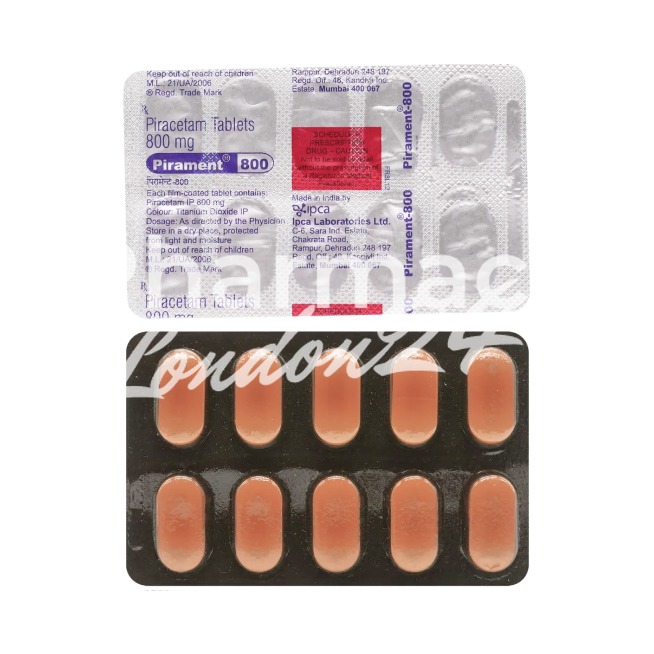
In brief
- In our pharmacy, you can buy piracetam, with delivery in 9–21 days throughout the United Kingdom. Discreet and anonymous packaging.
- Piracetam is licensed in the UK as add-on treatment for cortical myoclonus. It is thought to work by influencing neurotransmission in the brain.
- For cortical myoclonus the usual starting dose is 7.2 g per day, divided into two or three doses, and it is adjusted by the specialist.
- The form of administration is a tablet or oral solution.
- The effect of the medication begins within a few hours of administration.
- It is usually taken two or three times a day.
- Alcohol consumption should be limited as it may interfere with the medication's efficacy.
- The most common side effect is gastrointestinal upset, including nausea and diarrhoea.
- Would you like to try piracetam?
Basic piracetam information
- International nonproprietary name (INN): Piracetam
- Brand names available in the United Kingdom: Nootropil; generic piracetam
- ATC code: N06BX03
- Forms and dosages: Tablets 800 mg and 1200 mg; oral solution
- Manufacturers in the United Kingdom: UCB Pharma (Nootropil) and other manufacturers
- Registration status in the United Kingdom: Licensed by the MHRA (as add-on treatment for cortical myoclonus); prescription only
- OTC / Rx classification: Prescription-only medicine (POM)
Everyday use and best practices
Piracetam is a prescription-only medicine that is taken as directed by the prescriber. Understanding how to take it correctly is key to getting the most benefit from it.
Morning vs evening dosing
Piracetam is usually taken in two or three divided doses a day. Taking the last dose earlier in the evening may reduce the likelihood of insomnia at night. Establishing a consistent daily routine aids in achieving more stable and reliable effects.
Taking with or without meals
Piracetam tablets can be taken with or without food. Some individuals may face mild gastrointestinal discomfort when it is taken on an empty stomach, in which case taking it with a meal can help alleviate any adverse effects.
Safety priorities
Understanding who should avoid or limit the use of piracetam is important for safety.
Who should avoid it
Certain individuals should avoid piracetam or use it only with caution. Populations that should refrain from its use include those with severe renal impairment, those with cerebral haemorrhage, and women who are pregnant or breastfeeding. It's crucial for anyone with a history of hypersensitivity to the drug to consult a healthcare professional prior to starting piracetam, especially if they have pre-existing health conditions.
Activities to limit
Piracetam can cause drowsiness or other side effects in some people, so activities requiring full alertness, such as driving or operating machinery, should be approached with caution. Evaluating personal reactions to the medication before undertaking such tasks is essential to ensure both safety and efficacy.
Dosage and adjustments
Understanding the appropriate dosage for piracetam is vital for its effectiveness.
General regimen
For the licensed UK use as add-on treatment of cortical myoclonus, the usual starting dose is 7.2 g per day in two or three divided doses, which the specialist may increase every three to four days up to a maximum of 20 g per day. It is imperative for patients to adhere closely to their prescriber’s instructions to ensure optimal efficacy and minimise side effects.
Special cases
Elderly patients and those with comorbidities should exercise caution when taking piracetam. The dose is reduced in renal impairment, and the specialist may start with a lower dose and titrate gradually. Regular monitoring of these patients is crucial for ensuring their safety and effectiveness of the treatment.
What’s inside and how it works
Ingredients overview
The active ingredient piracetam is a cyclic derivative of γ-aminobutyric acid (GABA). It is available as 800 mg and 1200 mg tablets and as an oral solution. Manufacturers also include inert ingredients that stabilise the formulation.
Mechanism basics explained simply
The way piracetam works isn't entirely clear, but it's believed to improve neuronal function. It is thought to influence neurotransmission and the fluidity of cell membranes, and it is classed as a nootropic.
Main indications
Approved uses (MHRA listing)
In the UK, piracetam (Nootropil) is licensed by the MHRA as add-on treatment of cortical myoclonus. Use for memory problems or other cognitive impairment is not a licensed UK indication.
Off-label uses in UK clinics
Beyond its approved application, piracetam has been used off-label in some clinical settings, for example in cognitive impairment, although this is not licensed in the UK. Engaging in discussions about off-label uses with healthcare practitioners is essential, enabling patients to consider the potential benefits and drawbacks effectively.
Interaction warnings
Food interactions (alcohol, tea/coffee)
Caution is advised regarding food interactions with piracetam. It may enhance the sedative effects of alcohol, potentially leading to increased drowsiness or cognitive impairment. Therefore, moderating alcohol intake is highly recommended.
Drug conflicts
Piracetam has shown potential interactions with certain medications, specifically anticoagulants and anti-epileptic drugs. It is important to tell your healthcare provider about all medications you are taking, to reduce the risk of adverse interactions or side effects.
Alternative choices
NHS prescribing alternatives with pros/cons checklist
For cortical myoclonus, alternatives that specialists may consider include levetiracetam, clonazepam and sodium valproate. Each has its own advantages and disadvantages in terms of effectiveness and side effects:
- Levetiracetam: Often used as add-on treatment for myoclonus; may cause drowsiness and mood changes.
- Clonazepam: Reduces myoclonic jerks; can cause sedation and dependence.
- Sodium valproate: Effective for several seizure types; not suitable for women who could become pregnant unless a pregnancy prevention programme is followed.
The choice should be made with a specialist who can tailor treatment to the individual.
| City | Region | Delivery time |
|---|---|---|
| London | Greater London | 9–21 days |
| Birmingham | West Midlands | 9–21 days |
| Manchester | Greater Manchester | 9–21 days |
| Leeds | West Yorkshire | 9–21 days |
| Glasgow | Scotland | 9–21 days |
| Sheffield | South Yorkshire | 9–21 days |
| Bradford | West Yorkshire | 9–21 days |
| Liverpool | Merseyside | 9–21 days |
| Bristol | South West | 9–21 days |
| Newcastle | Tyne and Wear | 9–21 days |
| Nottingham | East Midlands | 9–21 days |
| Cardiff | Wales | 9–21 days |
| Coventry | West Midlands | 9–21 days |
| Hull | East Yorkshire | 9–21 days |



