
Memantine
In stock
10mg
from 67,45 £
In brief
- Memantine is a prescription-only medicine for adults with moderate to severe Alzheimer's disease, working on glutamate signalling in the brain.
- The listing offers 10 mg tablets in packs of 30, 60, 90, 120 and 180.
- Treatment begins at 5 mg a day and rises weekly to a maintenance dose of 20 mg once daily, which is also the upper limit.
Memantine tablets and their place in Alzheimer's care
Memantine is classed as an NMDA receptor antagonist. In Alzheimer's disease, nerve cells are thought to be over-stimulated by glutamate, a chemical messenger, and memantine partly blocks that excess activity. The drug differs from the cholinesterase inhibitors such as donepezil, which work in another way, and the two types are sometimes used side by side. Memantine does not stop Alzheimer's disease from progressing, but it may help to hold on to everyday abilities, thinking and behaviour for longer in some people. The UK licence applies to adults whose dementia is at the moderate or severe stage.
Strength and packs available here
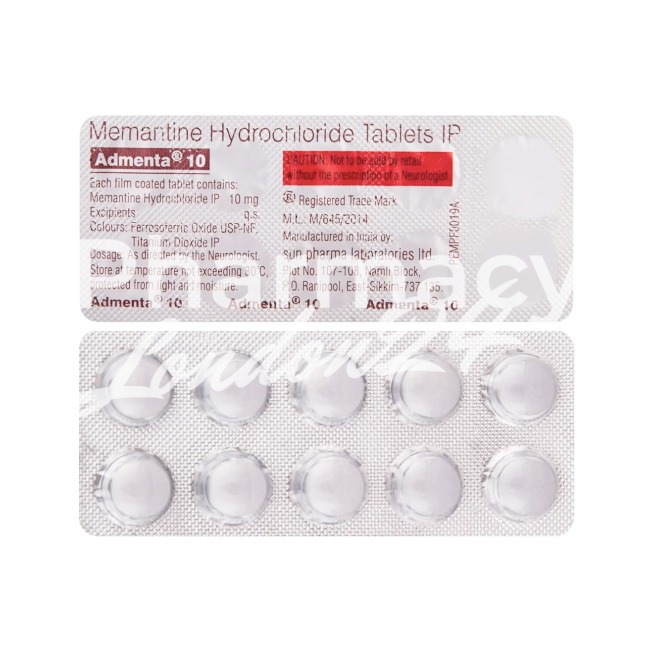
Only the 10 mg tablet is listed, in packs of 30, 60, 90, 120 or 180 tablets. A 180-tablet pack lasts 90 days at the full 20 mg dose. This memantine is an imported generic and not a UK-licensed pack. Within the UK, memantine is a prescription-only medicine (POM); the original brand is Ebixa, and many generic makers supply tablets in 10 mg and 20 mg strengths, alongside an oral solution for people who struggle to swallow.
The weekly step-up schedule
Dosing starts low. The SmPC describes 5 mg a day in the first week, 10 mg in the second, 15 mg in the third, and 20 mg a day from week four onwards; in 10 mg tablets, that is a half, a whole, one and a half, and finally two a day. The maintenance dose of 20 mg once daily is also the highest dose recommended. Tablets can be taken with or without food, at the same time each day. Because missed doses are common in dementia, the SmPC advises that a carer should supervise treatment. Your prescriber will usually look at how well it is working after about three months.
Kidney and liver function, age and children
Dose changes depend on how well the kidneys filter. Mild impairment needs no adjustment. With moderate impairment the daily dose is 10 mg, and can be raised to 20 mg if it is tolerated after at least a week. With severe impairment, 10 mg a day is the ceiling. Mild to moderate liver problems do not require a change, but severe liver impairment has not been studied, so it is not recommended. There is no separate adjustment for older adults, and there are no data to support use in children.
Warnings and medicines that interact
Hypersensitivity to the active substance or an excipient is the sole contraindication. Take care if you have epilepsy or have had fits, a recent heart attack, uncontrolled high blood pressure or heart failure that is not under control. Factors that make the urine more alkaline, such as a switch to a strict vegetarian diet, can raise blood levels, as can serious urinary infections or kidney tubular acidosis. Amantadine, ketamine and dextromethorphan act on the same receptor and are generally avoided alongside it. Other medicines with possible effects include L-dopa, baclofen, dantrolene, barbiturates, antipsychotics and drugs cleared through the kidneys such as cimetidine, quinidine and nicotine. Warfarin users may need closer INR checks. Pregnancy and breastfeeding need discussion with the prescriber, since the SmPC advises against use in breastfeeding.
Side effects and driving
Common side effects include headache, sleepiness, dizziness, constipation, breathlessness, raised blood pressure and changes in liver tests. Confusion, hallucinations, vomiting, tiredness and abnormal gait occur less often, and seizures are very rare. As it may cause dizziness or drowsiness, anyone affected should avoid driving and machinery. Contact the GP with any troubling symptom, and dial 999 for a severe reaction. The decision to start, adjust or stop treatment rests with the doctor in charge of the person's care.



