
Meclizine
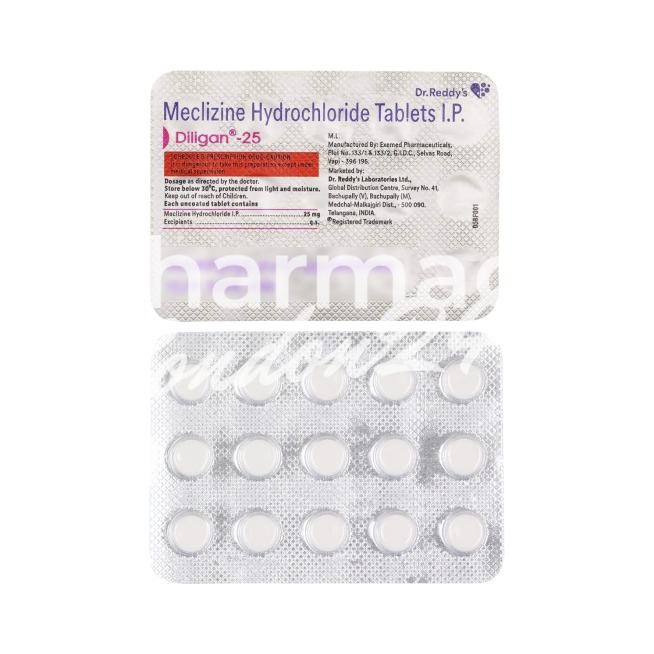
In brief
- Meclizine can be purchased in pharmacies without a prescription throughout the United Kingdom, typically available in discreet packaging.
- Meclizine is used for the prevention and treatment of motion sickness and vertigo. The drug works as an antihistamine, reducing the effects of natural histamine in the body.
- The usual dosage for motion sickness is 25–50 mg taken 1 hour before travel, and for vertigo, it's 25–100 mg daily in divided doses.
- Meclizine is administered in tablet form.
- The effect of the medication begins within 1 hour.
- The duration of action is up to 24 hours.
- Alcohol should be avoided while taking meclizine, as it can increase drowsiness.
- The most common side effect is drowsiness.
- Would you like to try meclizine without a prescription?
Basic meclizine information
- INN (international nonproprietary name): Meclozine (meclizine)
- Brand names available in the United Kingdom: Meclozine
- ATC code: R06AE05
- Forms and dosages: Tablets 12.5 mg and 25 mg
- Manufacturers in the United Kingdom: Multiple generic manufacturers
- Registration status in the United Kingdom: Pharmacy (P) medicine for travel sickness
- OTC / Rx classification: P (pharmacy medicine) for travel sickness; use for vertigo should be discussed with a doctor
Everyday use and best practices
Taking meclizine effectively hinges on smart timing and dietary habits for optimal performance throughout the day.Morning vs evening dosing
Determining when to take meclizine can make a world of difference.- Morning dosing may be ideal if planning activities that could induce motion sickness or vertigo.
- Evening dosing can be beneficial for those who notice more symptoms at night or just before travelling.
Taking with or without meals
Meclizine can be taken with or without food. When taken:- On an empty stomach, meclizine might be absorbed more quickly.
- With meals, absorption could be slower, but taking it with food may ease gastrointestinal irritation.
Safety priorities
Understanding who should avoid meclizine and which activities to limit is essential for safe use.Who should avoid it (MHRA warnings)
Some individuals should avoid meclizine altogether:- People with severe liver impairment should avoid it due to altered metabolism.
- Those with known hypersensitivity to meclizine or any of its components should not take it.
- Caution is advised for individuals with certain medical conditions, such as angle-closure glaucoma.
Activities to limit (driving, work safety)
Meclizine may induce drowsiness, impacting activities requiring full attention.- Driving: it is crucial to assess how meclizine affects personal alertness before operating vehicles. Being drowsy behind the wheel poses safety risks not only to the driver but also to others.
- Work safety: jobs requiring high levels of concentration or machinery operation should be approached with caution. Always evaluate the potential for impaired performance.
Dosage and adjustments
Getting the dosage right ensures maximum benefit while minimising risks.General regimen (NHS guidance)
A standard dosage based on specific needs:- For motion sickness: a typical adult dose is 25-50 mg taken approximately 1 hour before travel.
- For vertigo: doses can range from 25-100 mg daily, divided into multiple administrations.
Special cases (elderly, comorbidities)
Special populations, such as elderly patients or those with comorbidities, may need tailored doses:- Elderly: starting with a lower dose, such as 12.5 mg, can mitigate risks of sedation or anticholinergic effects.
- Comorbidities: those with health conditions like liver or kidney issues should consult healthcare providers for appropriate dosing adjustments. Monitoring for adverse effects is critical to ensure safety.
What’s inside and how it works
Ingredients overview
Meclizine, known for its effectiveness as an antihistamine, is primarily used for treating motion sickness and vertigo. The active ingredient, meclizine hydrochloride, is usually combined with various excipients in formulations. Common excipients may include lactose, magnesium stearate, and microcrystalline cellulose. In the UK, meclozine is available as tablets (12.5 mg, 25 mg).
Mechanism basics explained simply
Understanding how meclizine works can demystify its benefits. This medication dampens the signals that your inner ear sends to your brain about balance, which can help ease those nagging feelings of dizziness and nausea. By blocking H1 receptors, meclizine reduces the activity of certain neurotransmitters responsible for vertigo and motion sickness. The reduction in these signals translates to a lessened perception of motion, keeping nausea at bay during travel or episodes of imbalance.
Main indications
Approved uses (MHRA listing)
In the UK, meclozine (meclizine) is used for:
- Motion sickness
- Vertigo
Off-label uses in UK clinics
Beyond these uses, meclizine is sometimes prescribed off-label in UK clinics, for example for anxiety related to motion or as a mild sedative in specific scenarios. Such uses should only follow individual medical advice.
Interaction warnings
Food interactions (alcohol, tea/coffee)
When using meclizine, dietary habits are crucial. Alcohol can amplify its sedative effects, leading to increased drowsiness. Patients are typically advised to limit alcohol intake while on meclizine.
Drug conflicts
It’s essential to be aware of drug interactions with meclizine. Meclizine can interact with other CNS depressants or sedatives, increasing drowsiness or the risk of adverse effects. Suspected side effects can be reported through the Yellow Card scheme. Consulting with a pharmacist or medical professional about concurrent medications is highly recommended to ensure safe use while minimising risks associated with these interactions.
Alternative choices
For those seeking alternatives, the NHS offers several options for managing similar conditions. Below is a comparison table to help weigh choices:
| Alternative medication | Pros | Cons |
|---|---|---|
| Cinnarizine | Approved for vertigo; | May cause drowsiness; |
| Dimenhydrinate | Effective for motion sickness; | Potentially more sedation; |
Patients may also explore non-medication strategies, such as vestibular rehabilitation exercises or lifestyle modifications, for managing dizziness and motion sickness without relying solely on medications like meclizine.
Regulation snapshot
Meclizine is known as meclozine in the UK, where it is licensed by the MHRA. Meclozine tablets for travel sickness are pharmacy (P) medicines, available from a pharmacist without a prescription. Use for vertigo should be discussed with a doctor, who can prescribe it on the NHS.
The MHRA oversees meclizine's clinical use in the UK, ensuring it aligns with safety standards. Healthcare professionals are advised to regularly evaluate its use among patients due to potential interactions with other medications, particularly in elderly populations.
Frequently asked questions
Can I buy meclizine over the counter in the UK?
In the UK, meclozine tablets for travel sickness are pharmacy (P) medicines, available from a pharmacist without a prescription. Use for vertigo should be discussed with a doctor.
What is meclizine used for?
Meclizine is primarily used to treat motion sickness and manage vertigo symptoms. It helps reduce dizziness and nausea associated with these conditions.
How often can I take meclizine for vertigo?
Patients are typically advised to take 25-100 mg daily, divided into doses. It's important to consult with a healthcare professional for tailored guidance and dosage adjustments based on individual health needs.
Are there any side effects?
Common side effects of meclizine include drowsiness, dry mouth, and blurred vision. In the elderly, it may lead to increased confusion or fatigue; hence, monitoring is advisable.
Guidelines for proper use
UK pharmacist counselling style
When dispensing meclizine, pharmacists play a vital role in guiding patients on its effective use. This typically involves:
- Discussing the importance of adherence to prescribed dosages
- Encouraging patients to voice any concerns or side effects experienced
- Providing information on potential interactions, especially with alcohol
NHS patient support advice
For patients requiring additional support, the NHS offers various resources. Useful options include:
- NHS 111 helpline for urgent advice
- Online services like the NHS website, providing comprehensive drug information
- Local pharmacy consultations for queries regarding meclizine or related health issues
Consistent communication with healthcare professionals is crucial for optimal health management. Patients are encouraged to follow-up regularly to assess the effectiveness of meclizine for their conditions, adapting treatment as necessary.
| City | Region | Delivery time |
|---|---|---|
| London | England | 9–21 days |
| Birmingham | England | 9–21 days |
| Manchester | England | 9–21 days |
| Leeds | England | 9–21 days |
| Glasgow | Scotland | 9–21 days |
| Cardiff | Wales | 9–21 days |
| Bristol | England | 9–21 days |
| Edinburgh | Scotland | 9–21 days |
| Newcastle upon Tyne | England | 9–21 days |
| Sheffield | England | 9–21 days |
| Nottingham | England | 9–21 days |
| Southampton | England | 9–21 days |
| Brighton | England | 9–21 days |
| Leicester | England | 9–21 days |
| Belfast | Northern Ireland | 9–21 days |



