
Mebendazole
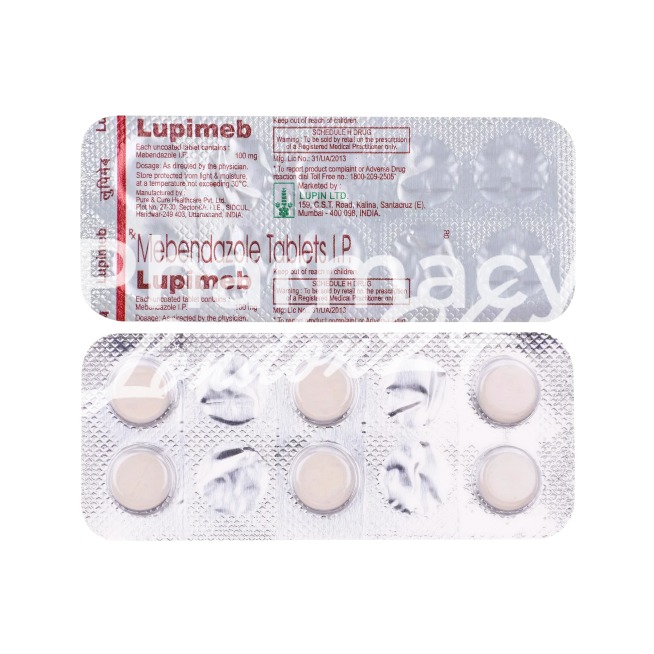
In brief
- In the UK, mebendazole 100 mg chewable tablets for threadworm are available from pharmacies; other uses require a prescription (POM).
- Mebendazole is used to treat worm infections, functioning as an anthelmintic by inhibiting the growth of worms in the intestines.
- The usual dose for adults and children over 2 years for threadworm is 100 mg once (repeated after two weeks if needed), while for other worm infections it is 100 mg twice daily for three days.
- The form of administration includes chewable tablets and oral suspension.
- The effect of the medication begins within a few hours of ingestion.
- It is advisable to avoid alcohol while taking mebendazole.
- The most common side effect is abdominal pain.
- Would you like to try mebendazole without a prescription?
Basic mebendazole information
- International nonproprietary name (INN): Mebendazole
- Brand names available in the United Kingdom: Vermox, Ovex
- ATC code: P02CA01
- Forms and dosages: Chewable tablets 100 mg, oral suspension 100 mg/5 mL
- Manufacturers in the United Kingdom: Various
- Registration status in the United Kingdom: Prescription-only medicine (POM); the 100 mg chewable tablet for threadworm is also available from pharmacies (P)
- OTC / Rx classification: Prescription-only medicine (POM), except the 100 mg chewable tablet for threadworm (P)
Everyday use and best practices
Mebendazole is an effective medication for treating various intestinal worm infections. Adhering to the dosing schedule is essential for optimal results. For threadworm (pinworm), a single dose may be adequate, repeated after two weeks if needed. In contrast, infections caused by roundworm (Ascaris) typically require the medication to be taken twice daily for three days. Parents managing doses for children should consider keeping track of intake timings.
Morning vs evening dosing
Choose a dosing time that accommodates your routine. Whether you prefer taking mebendazole in the morning or evening, the key is consistency, and taking doses at the same times each day helps parents overseeing their children's treatment.
Taking with or without meals
A significant advantage of mebendazole is its flexibility in being taken with or without food. There are no strict dietary restrictions. If gastrointestinal discomfort occurs, it is advisable to take mebendazole after meals. This may help alleviate any potential irritation.
Communication with healthcare providers remains important, particularly if any unexpected symptoms arise during the course of treatment.
What’s inside and how it works
Ingredients overview
The active component in mebendazole is available as 100 mg chewable tablets and a 20 mg/mL oral suspension. Each formulation also contains inactive ingredients that help stabilise the product.
Mechanism basics explained simply
The medication operates by inhibiting the absorption of glucose in worms, effectively leading them to starvation. This occurs through the disruption of microtubule formation within the parasite, which prevents it from functioning or reproducing properly. As a result, the body naturally expels the worms during bowel movements. It is used for intestinal worm infections such as threadworms, roundworms, whipworms and hookworms.
Main indications
Mebendazole is licensed in the UK for the treatment of various intestinal worm infections in children and adults. Its primary indications include:
- Threadworms (pinworms, Enterobius)
- Ascaris (large roundworm)
- Whipworm and hookworms
Off-label, some healthcare providers might prescribe mebendazole for other parasitic infections. This depends on the individual clinical scenario and a risk-benefit assessment against available alternatives.
Interaction warnings
Alcohol consumption is typically discouraged as it may intensify side effects, like gastrointestinal discomfort. Tea and coffee in moderate amounts are usually safe.
Mebendazole generally has few drug interactions, although caution is advised when it is combined with drugs affecting cytochrome P450 enzymes, such as cimetidine. Patients should tell healthcare providers about all the medicines they are taking.
| City | Region | Delivery Time |
|---|---|---|
| London | England | 9–21 days |
| Birmingham | England | 9–21 days |
| Manchester | England | 9–21 days |
| Leeds | England | 9–21 days |
| Glasgow | Scotland | 9–21 days |
| Bristol | England | 9–21 days |
| Liverpool | England | 9–21 days |
| Nottingham | England | 9–21 days |
| Sheffield | England | 9–21 days |
| Newcastle | England | 9–21 days |
| Cardiff | Wales | 9–21 days |
| Edinburgh | Scotland | 9–21 days |
| Belfast | Northern Ireland | 9–21 days |
| Southampton | England | 9–21 days |



