
Hytrin
In brief
- In our pharmacy, you can buy Hytrin without a prescription, with delivery available throughout the United Kingdom. Discreet and anonymous packaging.
- Hytrin is used for the treatment of benign prostatic hyperplasia (BPH) and hypertension. The drug is an alpha1-adrenergic blocker that relaxes blood vessels and muscles in the prostate and bladder neck.
- The usual starting dose of Hytrin is 1 mg at bedtime, increased gradually to a usual maintenance dose of 5–10 mg daily, depending on the condition being treated.
- The form of administration is oral tablets.
- The effect of the medication begins within 1–2 hours.
- The duration of action is approximately 24 hours.
- It is advised to avoid alcohol, as it may increase the risk of side effects like dizziness and fainting.
- The most common side effect is dizziness.
- Would you like to try Hytrin without a prescription?
Basic Hytrin information
- INN (international nonproprietary name): terazosin
- Brand names available in the United Kingdom: Hytrin; generic terazosin
- ATC code: G04CA03
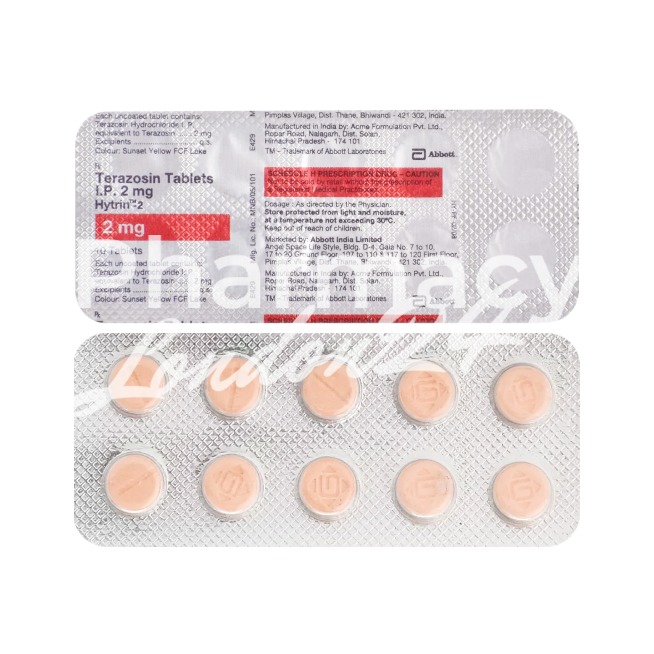
- Forms and dosages: Tablets 1 mg, 2 mg, 5 mg, 10 mg
- Manufacturers in the United Kingdom: Various generic manufacturers
- Registration status in the United Kingdom: Prescription-only medicine (POM)
- OTC / Rx classification: Prescription-only medicine (POM)
Everyday use and best practices
Hytrin is usually taken at bedtime, which helps to reduce dizziness during the day.
Hytrin can be taken with or without meals.
Safety priorities
Those with known allergies to terazosin or related quinazoline derivatives should not use this medication. Caution is needed in people with a history of syncope (fainting) on passing urine, and in those prone to low blood pressure on standing, particularly when starting treatment.
When considering activities such as driving, patients should recognise that dizziness may pose risks. It’s advisable to limit such activities, especially after starting Hytrin or adjusting the dose until individual tolerance is assessed.
Dosage and adjustments
The usual starting dose of Hytrin is 1 mg at bedtime for both benign prostatic hyperplasia (BPH) and hypertension. Depending on the response, the dose is increased gradually, usually to 5–10 mg once daily for BPH, with a maximum of 20 mg daily.
Different populations might require special considerations. For instance, elderly patients or those with liver or kidney impairments should start at a lower dose, allowing for safer management while mitigating the risk of adverse effects.
What’s inside and how it works
Ingredients overview
Hytrin's active ingredient is terazosin, which belongs to the alpha1-adrenergic blockers. This group of medicines blocks receptors in blood vessels and in the prostate and bladder neck, helping to ease symptoms of benign prostatic hyperplasia (BPH) and hypertension. The tablets also contain inactive ingredients; check the patient information leaflet if you have any allergies.
Mechanism basics explained simply
Hytrin blocks alpha1 receptors, which leads to the relaxation of blood vessels and of the muscle in the prostate and bladder neck. This lowers blood pressure and eases symptoms of BPH, such as difficulty passing urine.
Main indications
Approved uses
Hytrin is licensed in the UK for benign prostatic hyperplasia (BPH) and for hypertension (high blood pressure). It is not indicated for use in children, as its safety and efficacy have not been established.
Off-label uses in UK clinics
Hytrin is mainly prescribed for BPH and hypertension. Off-label uses are rare and the safety and efficacy of terazosin for unapproved uses have not been well studied.
Interaction warnings
Food interactions
Alcohol can significantly exacerbate side effects like dizziness and drowsiness when taken alongside Hytrin. It is wise to limit alcohol while on this medication.
Drug conflicts
Several medications can negatively interact with Hytrin, increasing the risk of adverse effects. For example, combining Hytrin with other antihypertensives can lead to additive hypotension. Discuss any new medicines or supplements with a pharmacist or prescriber before starting them. Suspected side effects can be reported through the Yellow Card scheme.
Alternative choices
Healthcare providers might consider several alternative medications for managing BPH and hypertension alongside or instead of Hytrin. Alternatives include doxazosin, which has a longer half-life and may be more convenient for certain patients, and tamsulosin, which is more uroselective and typically better tolerated regarding side effects. In brief:
- Hytrin: Effective for both BP and BPH but may cause dizziness.
- Doxazosin: Long-acting; fewer doses, but similar side effects.
- Tamsulosin: Focused on BPH; minimal impact on blood pressure but may not suit all patients.
All options should be discussed with healthcare providers to determine the best individual approach tailored to specific needs.
Regulation snapshot
Hytrin, containing terazosin, is an alpha1-adrenergic blocker and is a prescription-only medicine (POM) in the UK, licensed by the Medicines and Healthcare products Regulatory Agency (MHRA) for benign prostatic hyperplasia (BPH) and hypertension. Healthcare professionals evaluate whether it is appropriate for each patient, considering medical history and potential contraindications.
Frequently asked questions
What is Hytrin typically prescribed for?
Hytrin is mainly used for treating benign prostatic hyperplasia (BPH) and high blood pressure. It helps to relax blood vessels and facilitate easier urination for men experiencing prostate-related issues.
Are there common side effects associated with Hytrin?
Yes, common side effects include dizziness, headache, and fatigue. Patients may also experience postural hypotension, leading to light-headedness when standing up quickly.
How should Hytrin be taken?
Hytrin is usually initiated at a dosage of 1 mg at bedtime, with adjustments made based on the patient's response. Doses are increased gradually, usually to 5–10 mg daily, with a maximum of 20 mg daily.
What should I do if I miss a dose of Hytrin?
If a dose is missed, take it as soon as remembered, unless it is close to your next dose; in that case skip the missed dose and continue with your regular schedule. Never double up.
Guidelines for proper use
UK pharmacist counselling style
Pharmacists can offer guidance on how to take the medication correctly, manage side effects, and monitor progress.
Regular monitoring is essential for anyone on Hytrin. Check-ins can help ensure proper management of blood pressure and urinary symptoms, safeguarding against potential adverse effects, especially at the start of treatment or after dosage adjustments.
NHS patient support advice
If you have concerns about Hytrin or its side effects, speak to your pharmacist or healthcare team, or call NHS 111.
Delivery information
| City | Region | Delivery Time |
|---|---|---|
| London | Greater London | 9–21 days |
| Birmingham | West Midlands | 9–21 days |
| Manchester | Greater Manchester | 9–21 days |
| Glasgow | Scotland | 9–21 days |
| Leeds | West Yorkshire | 9–21 days |
| Sheffield | South Yorkshire | 9–21 days |
| Bristol | South West | 9–21 days |
| Newcastle upon Tyne | Tyne and Wear | 9–21 days |
| Nottingham | Nottinghamshire | 9–21 days |
| Southampton | Hampshire | 9–21 days |
| Leicester | Leicestershire | 9–21 days |
| Coventry | West Midlands | 9–21 days |
| Cardiff | Wales | 9–21 days |
| Stoke-on-Trent | Staffordshire | 9–21 days |
| Wolverhampton | West Midlands | 9–21 days |



