
Hydroquinone
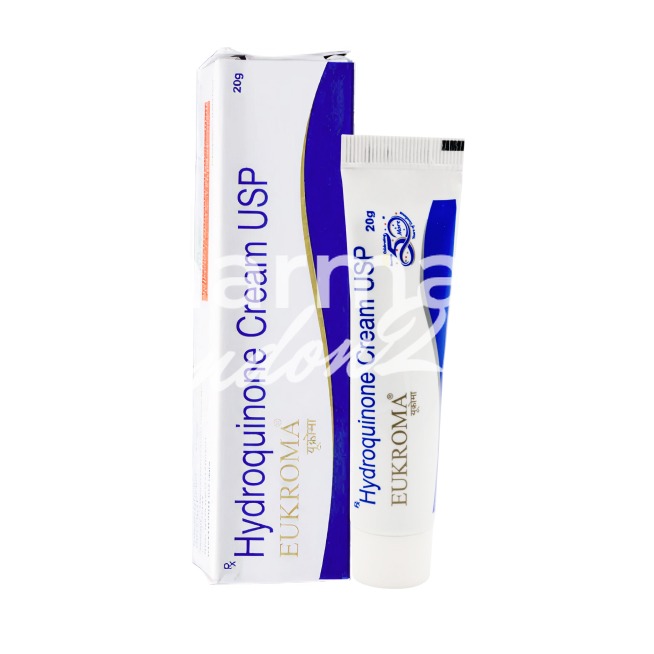
In brief
- You can purchase hydroquinone without a prescription in our pharmacy, with delivery throughout the United Kingdom.
- Hydroquinone is used for the treatment of melasma, hyperpigmentation, and age spots, working as a skin lightening agent by inhibiting melanin production.
- The usual dosage of hydroquinone is a thin layer applied 1–2 times daily depending on the condition being treated.
- The form of administration is a cream, gel, or lotion.
- The effect of the medication typically begins within a few weeks of regular use.
- Treatment is usually limited to 3–4 months, with reassessment by a healthcare professional.
- The most common side effect is mild redness or burning at the application site.
- Would you like to try hydroquinone without a prescription?
Basic hydroquinone information
- INN (international nonproprietary name): Hydroquinone
- ATC code: D11AX11
- Forms and dosages: Creams, gels and lotions, typically 2% and 4%; some products are combined with tretinoin and a corticosteroid
- Registration status in the United Kingdom: Prescription-only medicine (POM)
- OTC / Rx classification: Prescription-only medicine (POM)
Everyday use and best practices
Hydroquinone is a treatment for skin hyperpigmentation.
Morning vs evening dosing
Applying hydroquinone in the evening is often recommended, because the skin is then less exposed to UV light. If you prefer to apply it in the morning, follow up with a high-SPF sunscreen to protect the skin from sun exposure. Consistent use is important, as missing applications can prolong treatment.
Taking with or without meals
Hydroquinone is applied to the skin, so meals do not affect it and there are no dietary restrictions.
Safety priorities
Who should avoid it
Hydroquinone should be avoided during pregnancy and breastfeeding unless a specialist has advised its use, as there is no conclusive safety data. People with known hypersensitivity, broken skin, sunburn, eczema or dermatitis in the treated area should also avoid it, as it may worsen their condition.
Activities to limit
After applying hydroquinone, limit sun exposure, particularly sunbathing and sunbeds, and avoid any activity that could irritate the skin.
Dosage and adjustments
General regimen
A thin layer of hydroquinone cream (2–4%) is typically applied to the affected areas once or twice daily. Continuous use should usually be limited to around 3 to 4 months at a time to avoid adverse effects. Regular reviews with a healthcare professional are needed to assess the ongoing need for treatment and any potential side effects.
Special cases
For elderly patients or those with other conditions, such as liver or kidney problems, dosage adjustments may be necessary. As skin can be more sensitive with age, these patients should consult a dermatologist.
What’s inside and how it works
Ingredients overview
The active ingredient in these products is hydroquinone, typically at 2% or 4%. Some formulations also contain:
- Tretinoin - combined to enhance the effect on hyperpigmentation.
- Corticosteroids - included in some formulas to reduce inflammation and irritation.
Mechanism basics explained simply
Hydroquinone works by inhibiting an enzyme called tyrosinase. This enzyme is vital for melanin production, the pigment responsible for skin colour. By slowing down melanin synthesis, hydroquinone gradually lightens dark spots and hyperpigmentation, for example in melasma or age spots.
Main indications
Approved uses (MHRA listing)
Hydroquinone is used for treating conditions like:
- Melasma - a common skin condition causing dark, discoloured patches.
- Post-inflammatory hyperpigmentation - often a result of acne or injuries.
- Lentigines (age spots) - spots caused by sun exposure.
In the UK, hydroquinone is a prescription-only medicine, supplied as unlicensed preparations on a specialist's prescription.
Off-label uses in UK clinics
Dermatologists sometimes use hydroquinone off-label for other pigmentation disorders, including in combination therapies. Such use should only take place under specialist supervision.
Interaction warnings
Food interactions
There are no known food or drink interactions with topical hydroquinone.
Drug conflicts
Combining hydroquinone with other skin products, particularly peroxide-based products (which can cause temporary dark staining), other skin-lightening agents or irritant topical treatments, may heighten the risk of irritation or sensitivity. Consult a healthcare professional before mixing treatments, and report suspected side effects through the Yellow Card scheme.
Alternative choices
NHS prescribing alternatives
Alternatives include treatments such as:
- Azelaic acid - effective for acne and pigmentation but may take longer to show results.
- Kojic acid - a milder alternative that is less likely to cause irritation but may be less effective.
- Tranexamic acid - sometimes used for melasma under specialist supervision.
Discuss the benefits and potential drawbacks with a healthcare professional.
Regulation snapshot
In the UK, hydroquinone is regulated by the Medicines and Healthcare products Regulatory Agency (MHRA) and is a prescription-only medicine (POM). The NHS guidance is that it should only be used for specified dermatological indications, and patients should consult a healthcare provider to determine the appropriate concentration and formulation for their skin type and condition.
Frequently asked questions
Common questions about hydroquinone:
- Can hydroquinone cause side effects? Yes, side effects may include redness, mild burning, or in rare cases, allergic reactions and ochronosis, which is a bluish-black discolouration of the skin after prolonged use. Monitoring by a healthcare professional is advised.
- How long does it take for hydroquinone to work? Results typically become noticeable after 4-6 weeks of consistent use, but the full effects may take up to 3 months, depending on the individual’s skin condition and the concentration used.
- Can I use hydroquinone with other treatments? Hydroquinone is sometimes combined with tretinoin and a corticosteroid in specialist-prescribed products. Always consult a healthcare professional before mixing treatments to avoid irritation.
- Is hydroquinone available without a prescription? No – in the UK hydroquinone is a prescription-only medicine.
- Is hydroquinone safe during pregnancy? Safety is not well-established during pregnancy and breastfeeding; hence, consult a specialist before using hydroquinone in these conditions.
Guidelines for proper use
A pharmacist will typically discuss the following topics:
- Application advice: A thin layer should be applied to cleansed skin, avoiding sensitive areas like the eyes and mouth.
- Sun protection: Using a broad-spectrum sunscreen (SPF 30+) is essential when using hydroquinone, as it can increase sun sensitivity.
- Duration of use: Prolonged use beyond the recommended duration can lead to unwanted side effects, and regular skin assessments are essential.
NHS resources, such as advice lines and information leaflets, are also available, and dermatology services can provide advice tailored to individual skin needs.
| City | Region | Delivery Time |
|---|---|---|
| London | England | 9–21 days |
| Birmingham | England | 9–21 days |
| Manchester | England | 9–21 days |
| Glasgow | Scotland | 9–21 days |
| Liverpool | England | 9–21 days |
| Bristol | England | 9–21 days |
| Newcastle | England | 9–21 days |
| Sheffield | England | 9–21 days |
| Cardiff | Wales | 9–21 days |
| Leeds | England | 9–21 days |
| Coventry | England | 9–21 days |
| Nottingham | England | 9–21 days |
| Derby | England | 9–21 days |
| Southampton | England | 9–21 days |
| Portsmouth | England | 9–21 days |



