
Griseofulvin
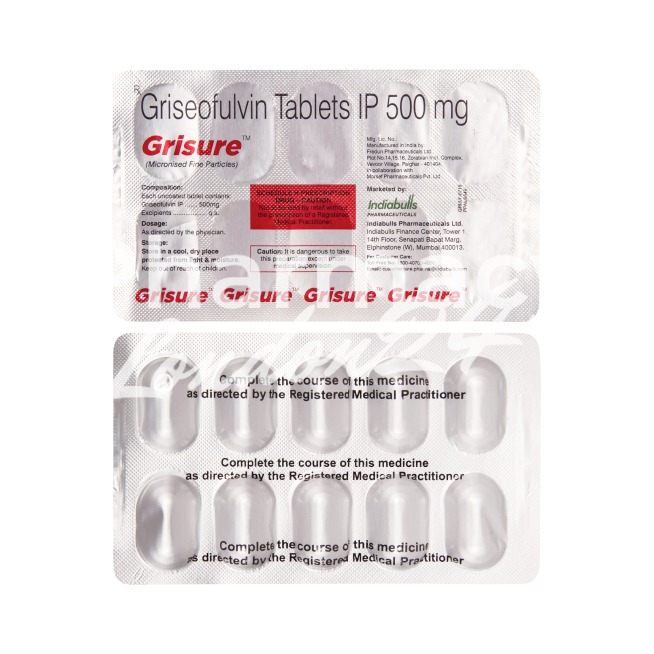
In brief
- In our pharmacy, you can buy griseofulvin without a prescription, with delivery in 9–21 days throughout the United Kingdom. Discreet and anonymous packaging.
- Griseofulvin is intended for the treatment of dermatophyte infections including tinea capitis, tinea corporis, tinea unguium, and tinea pedis. The drug works by inhibiting fungus cell mitosis.
- The usual dose of griseofulvin is 500 mg daily for adults (up to 1 g daily in severe infections), and 10 mg/kg/day for children based on weight.
- The form of administration is oral tablets.
- The effect of the medication typically begins within several days, depending on the condition being treated.
- It is advised to avoid alcohol during treatment due to potential interactions.
- The most common side effect is headache.
- Would you like to try griseofulvin without a prescription?
Basic griseofulvin information
- INN (international nonproprietary name): Griseofulvin
- Brand names available in the United Kingdom: Grisovin; generic griseofulvin tablets
- ATC code: D01BA01
- Forms and dosages: Tablets 125 mg and 500 mg
- Manufacturers in the United Kingdom: Generic manufacturers
- Registration status in the United Kingdom: Prescription-only medicine (POM)
- OTC / Rx classification: Prescription-only medicine (POM)
Everyday use and best practices
Griseofulvin is an antifungal commonly prescribed for dermatophyte infections. It is taken for several weeks or months, so a regular routine helps.
Morning vs evening dosing
Griseofulvin can be taken as a single daily dose or divided into several doses, as directed by your prescriber. Take the doses at the same times each day. If side effects such as drowsiness are a concern, evening doses may reduce daytime disturbances.
Taking with or without meals
Griseofulvin’s absorption is increased by food. It is recommended to take it with or after a meal, particularly one containing some fat, which also helps to prevent gastrointestinal discomfort.
Safety priorities
Who should avoid it
Griseofulvin is not suitable for everyone. It should not be used by individuals with:
- Severe hepatic impairment
- Known hypersensitivity to griseofulvin or any excipients
- Porphyria
- Systemic lupus erythematosus
- Pregnancy (due to teratogenic risks); men should also avoid fathering a child during treatment and for 6 months afterwards, and women should avoid pregnancy during treatment and for 1 month afterwards
These groups are at increased risk of side effects and should ask a healthcare professional about alternative treatments.
Activities to limit
Patients taking griseofulvin should approach certain activities with caution. Driving and operating heavy machinery are areas of concern due to potential side effects such as dizziness. It is wise to refrain from these activities until you understand how the medication affects your alertness and response time.
Dosage and adjustments
General regimen
Standard dosages for griseofulvin depend on age and weight:
- Adults: generally 500 mg daily, taken as a single or divided dose, increased to 1 g daily in severe infections.
- Children: the dose is based on weight, typically 10 mg/kg/day.
Follow the prescriber's instructions for accurate dosing, especially when treating conditions like tinea capitis or nail infections.
Special cases
For elderly patients or those with comorbid conditions, dosage adjustments may be necessary. While no specific alterations are dictated for the elderly, careful monitoring of liver function is recommended. Similarly, patients with kidney issues should receive clinical oversight while on treatment, ensuring safety throughout the regimen.
What’s inside and how it works
Ingredients overview
The active ingredient is griseofulvin, a fungistatic agent that works against dermatophyte infections. The tablets also contain excipients, which vary between brands; check the patient information leaflet if you have allergies. In the UK, griseofulvin tablets are available in strengths of 125 mg and 500 mg.
Mechanism basics explained simply
Griseofulvin works by disrupting fungal cell division. Specifically, it binds to the fungus's microtubules, inhibiting mitosis, which prevents the cells from replicating. This stops the growth of the fungus, and the infected skin, hair or nail is gradually replaced by healthy tissue as it grows out.
Main indications
Approved uses
Griseofulvin is licensed in the UK for dermatophyte infections of the skin, scalp, hair and nails, including tinea capitis (scalp ringworm), tinea corporis (body ringworm), tinea unguium (nail infections) and tinea pedis (athlete's foot). It is mainly used when topical treatment has failed or is unsuitable, and it is widely used for scalp ringworm in children.
Off-label uses in UK clinics
In UK clinics, griseofulvin may occasionally be prescribed off-label, for example for persistent dermatophyte infections that do not respond to standard antifungal treatments. Such decisions are based on clinical judgement for each patient.
Interaction warnings
Food interactions
Alcohol should be avoided or limited, as griseofulvin can enhance its effects and may cause a disulfiram-like reaction with flushing, nausea and palpitations.
Drug conflicts
Griseofulvin can interact with various medications, leading to altered effects or increased risk of side effects. Medicines that may cause concerns include warfarin and other anticoagulants, barbiturates, ciclosporin and some antiepileptic medicines. Griseofulvin can also reduce the effectiveness of hormonal contraceptives, so additional contraception is needed. Discuss your entire medication list with healthcare providers. Suspected side effects can be reported through the Yellow Card scheme.
Alternative choices
When considering alternatives to griseofulvin, various antifungal treatments should be evaluated:
- Terbinafine: Effective and has shorter treatment duration.
- Itraconazole: Broad spectrum but can have more side effects.
- Fluconazole: Generally well-tolerated but less effective against all dermatophytes.
Each alternative has its merits, and griseofulvin has a long history of use in treating paediatric scalp ringworm.
Regulation snapshot
Griseofulvin is licensed in the UK by the MHRA (Medicines and Healthcare products Regulatory Agency) and is a prescription-only medicine (POM) because of its potential side effects and the need for monitoring during treatment.
Healthcare professionals prescribe it for conditions such as tinea capitis or tinea unguium, with ongoing assessment of treatment effectiveness and of any adverse reactions.
Frequently asked questions
Common questions about griseofulvin include:
- How long will I need to take griseofulvin?
- What are the side effects I should be aware of?
Treatment duration can vary significantly depending on the fungal infection type. For conditions like tinea capitis, treatment typically lasts 2 to 6 weeks. In contrast, nail infections may require continuous use of griseofulvin for several months.
Side effects may include mild symptoms such as headache, dizziness, or gastrointestinal discomfort. Patients should also be cautious about photosensitivity, which means increased sensitivity to sunlight. Any persistent or severe reaction should prompt a consultation with a healthcare provider.
Guidelines for proper use
When dispensing griseofulvin, a pharmacist will:
- give clear instructions on doses tailored for age and weight;
- advise on potential interactions with other medicines.
It’s also important to inform patients about the importance of completing the full course of griseofulvin, even if symptoms improve early on. For further assistance, the NHS offers helplines (NHS 111) and information websites.
| City | Region | Delivery Time |
|---|---|---|
| London | Greater London | 9–21 days |
| Birmingham | West Midlands | 9–21 days |
| Manchester | North West | 9–21 days |
| Glasgow | Scotland | 9–21 days |
| Leeds | West Yorkshire | 9–21 days |
| Cardiff | Wales | 9–21 days |
| Edinburgh | Scotland | 9–21 days |
| Sheffield | South Yorkshire | 9–21 days |
| Bristol | South West | 9–21 days |
| Newcastle | North East | 9–21 days |
| Nottingham | East Midlands | 9–21 days |
| Coventry | West Midlands | 9–21 days |
| Sunderland | North East | 9–21 days |
| Brighton | South East | 9–21 days |
| Cardiff | South Wales | 9–21 days |
| Plymouth | South West | 9–21 days |



