
Dexilant
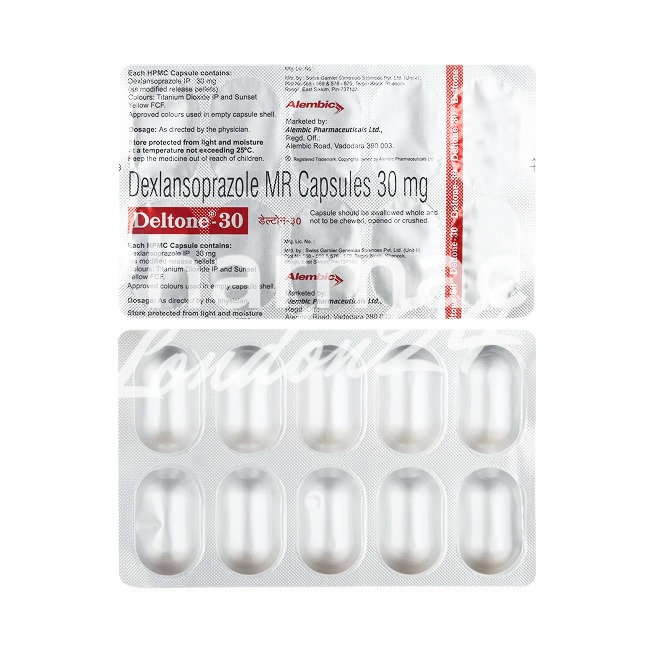
In stock
30mg · 60mg
from 44,97 £
In brief
- In our pharmacy, you can buy Dexilant without a prescription, with delivery in 9–21 days throughout the United Kingdom. Discreet and anonymous packaging.
- Dexilant is used for the treatment of gastro-oesophageal reflux disease (GERD) and erosive oesophagitis (it is not licensed in the UK). The drug acts as a proton pump inhibitor, reducing stomach acid production.
- The usual dose of Dexilant is 30 mg to 60 mg once daily.
- The form of administration is a modified-release capsule.
- The effect of the medication begins within 1 to 2 hours after ingestion.
- The duration of action is up to 24 hours.
- Do not consume alcohol while taking Dexilant.
- The most common side effect is diarrhoea.
- Would you like to try Dexilant without a prescription?
Basic Dexilant information
- INN (international nonproprietary name): Dexlansoprazole
- Brand names available in the United Kingdom: Dexilant is not licensed in the UK
- ATC code: A02BC06
- Forms and dosages: Dual delayed-release capsules 30 mg, 60 mg
- Manufacturers in the United Kingdom: Takeda Pharmaceuticals (original manufacturer)
- Registration status in the United Kingdom: Not licensed in the UK; dexlansoprazole is a prescription-only medicine
- OTC / Rx classification: Prescription-only medicine (POM)
Everyday use and best practices
Dexilant (dexlansoprazole) is a proton pump inhibitor taken once daily, as directed by a prescriber.
Morning vs evening dosing
Dexilant is taken once daily. Morning dosing is usual, but those with night-time symptoms may be advised to take it in the evening. Maintain a consistent schedule each day.
Taking with or without meals
Dexilant can be taken with or without food; meals do not affect its efficacy.
Swallow the capsule whole. Discuss any concerns about dose and frequency with your healthcare provider, especially if symptoms persist.
What’s inside and how it works
Dexilant is formulated with dexlansoprazole, belonging to a class of medications called proton pump inhibitors (PPIs). Each capsule has a unique design featuring a dual delayed-release mechanism. This feature ensures that dexlansoprazole is released into the digestive tract at two distinct rates, allowing for prolonged relief from acid reflux symptoms.
Ingredients overview
Dexilant is composed primarily of dexlansoprazole, but it also contains several excipients that aid in the capsule's formulation. The dual delayed-release system helps to maintain an effective level of medicine in the body.
Mechanism basics explained simply
Dexilant works by irreversibly blocking the proton pumps located in the stomach lining, which are responsible for producing gastric acid. By inhibiting these proton pumps, dexlansoprazole greatly reduces acid secretion. This reduction not only alleviates the discomfort associated with acid reflux but also promotes the healing of the oesophagus in conditions like GERD and erosive oesophagitis.
Main indications
Dexilant (dexlansoprazole) is not licensed in the UK. Dexlansoprazole is used for the treatment of erosive oesophagitis arising from gastro-oesophageal reflux disease (GERD) and to maintain healing in patients with a history of erosive oesophagitis.
Other uses
PPIs such as dexlansoprazole may also be used for symptom management in Barrett’s oesophagus. Always consult your healthcare provider about the benefits and risks.
Interaction warnings
Food interactions
Alcohol, tea and coffee can irritate the stomach and may worsen reflux symptoms. Discuss any concerns about food with your healthcare provider.
Drug conflicts
Dexilant can interact with other medications that depend on gastric acidity for absorption, such as atazanavir. Suspected side effects can be reported through the Yellow Card scheme. To ensure safety, it’s crucial for patients to inform their healthcare providers about all medications they take, including over-the-counter drugs and supplements.
Alternative choices
When exploring alternatives to Dexilant, several licensed proton pump inhibitors (PPIs) are available through NHS prescriptions. Other options may better suit individual needs.
| PPI name | Pros | Cons |
|---|---|---|
| Omeprazole | Widely used; long clinical experience | May require dosing adjustments |
| Esomeprazole | Better acid control | May interact with clopidogrel |
| Pantoprazole | Fewer drug interactions | Less studied for certain conditions |
Discuss your options with a healthcare provider.
Regulation snapshot
Dexilant is not licensed in the UK, where medicines are regulated by the Medicines and Healthcare products Regulatory Agency (MHRA). Dexlansoprazole is a prescription-only medicine, and healthcare professionals must assess individual suitability before prescribing it.
Frequently asked questions
Common questions about Dexilant:
- What should I do if I miss a dose of Dexilant?
Take it as soon as you remember unless it’s near the time for your next dose. Never double up. - Can I use Dexilant during pregnancy?
Consult your healthcare provider; the risk versus benefit should be evaluated. - Will Dexilant affect my vitamin levels?
Long-term use may lead to vitamin B12 deficiency; monitoring is recommended. - How long can I safely take Dexilant?
The duration of treatment is decided by the prescriber, with ongoing monitoring for maintenance. Always adhere to your doctor's guidance.
Guidelines for proper use
Pharmacists counsel patients on the proper use of Dexilant. Adhere to the prescribed regimen and do not stop the medicine abruptly without consulting a doctor.
Report any unusual side effects or concerns to your healthcare provider, and suspected side effects can be reported through the Yellow Card scheme.
Delivery information
| City | Region | Delivery Time |
|---|---|---|
| London | Greater London | 9–21 days |
| Birmingham | West Midlands | 9–21 days |
| Manchester | Greater Manchester | 9–21 days |
| Leeds | West Yorkshire | 9–21 days |
| Glasgow | Scotland | 9–21 days |
| Liverpool | Merseyside | 9–21 days |
| Bristol | South West England | 9–21 days |
| Sheffield | South Yorkshire | 9–21 days |
| Newcastle | Tyne and Wear | 9–21 days |
| Nottingham | East Midlands | 9–21 days |
| Manchester | North West England | 9–21 days |
| Cardiff | Wales | 9–21 days |
| Coventry | West Midlands | 9–21 days |
| Bradford | West Yorkshire | 9–21 days |
| Cardiff | South Wales | 9–21 days |



