
Colchicine
In brief
- In our pharmacy, you can buy colchicine without a prescription, with delivery available throughout the United Kingdom. Discreet and anonymous packaging.
- Colchicine is intended for the treatment of gout and is also used off-label for Familial Mediterranean Fever and pericarditis. The drug works by reducing inflammation.
- The usual dose of colchicine for an acute gout flare is 500 micrograms two to four times daily until relieved, with a maximum of 6 mg in total for a course.
- The form of administration is a tablet.
- The effect of the medication begins within 1–2 hours.
- Do not consume alcohol while taking colchicine.
- The most common side effect is diarrhoea.
- Would you like to try colchicine without a prescription?
Basic colchicine information
- International nonproprietary name (INN): Colchicine
- Brand names available in the United Kingdom: Generic colchicine tablets
- ATC code: M04AC01
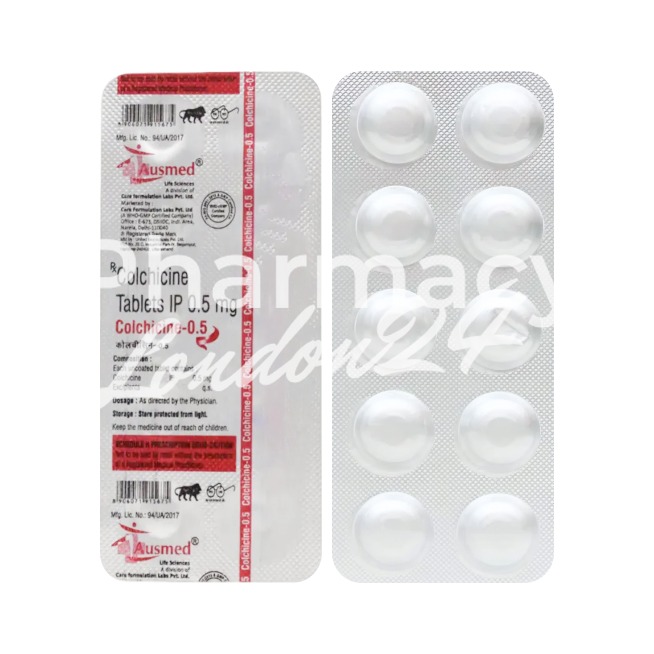
- Forms and dosages: Tablets (500 micrograms)
- Manufacturers in the United Kingdom: Various generic manufacturers
- Registration status in the United Kingdom: Prescription-only medicine (POM)
- OTC / Rx classification: Prescription-only medicine (POM)
Everyday use and best practices
Colchicine is a commonly prescribed medication for managing gout, and knowing how to take it can enhance its effectiveness.
Morning vs evening dosing
For an acute gout attack, colchicine is taken at the first sign of a flare, with doses repeated as directed until pain is relieved. Starting treatment early can bring faster relief.
When it is used for prevention, it is best to take it at approximately the same time each day.
Taking with or without meals
Colchicine can be taken with or without food. Taking it with a meal may reduce gastrointestinal side effects, which are common with this medication.
What’s inside and how it works
Ingredients overview
Colchicine tablets predominantly contain the active ingredient colchicine, with additional excipients. Colchicine tablets in the UK contain 500 micrograms (0.5 mg) of colchicine.
Mechanism basics explained simply
Colchicine inhibits microtubule polymerisation, which reduces inflammation and relieves pain during gout attacks. Unlike treatments such as allopurinol that lower uric acid levels, colchicine acts on the inflammatory pathways.
Main indications
Colchicine is used to treat gout flare-ups and to prevent flares when starting treatment with a urate-lowering medicine such as allopurinol. It is also used in specialist care for Familial Mediterranean Fever (FMF).
Approved uses (MHRA listing)
In the UK, colchicine is licensed for managing acute gout attacks, relieving pain and swelling, and for preventing attacks when starting treatment with allopurinol. The usual dose for an acute attack is 500 micrograms two to four times daily until symptoms are relieved, with a maximum of 6 mg in total for a course of treatment. FMF is an off-label use.
Off-label uses in UK clinics
In numerous UK clinics, colchicine is also prescribed off-label for managing FMF and pericarditis. Patients should understand the distinction between licensed uses and those that occur in a clinical setting outside the licence.
Interaction warnings
Awareness of interaction risks while taking colchicine is vital. Alcohol can exacerbate gastrointestinal side effects, and grapefruit juice should be avoided as it can raise colchicine levels.
Food interactions (alcohol, tea/coffee)
Colchicine can lead to digestive discomfort, making it wise for patients to reduce alcohol. Avoid grapefruit juice during treatment.
Drug conflicts
Colchicine can interact dangerously with certain medications, particularly strong CYP3A4 or P-gp inhibitors, which can raise toxicity risks. Patients are strongly advised to keep their healthcare providers informed about all medicines they are taking, including clarithromycin, ciclosporin and statins, which are known to interact.
Alternative choices
When gout management calls for alternatives, medicines such as allopurinol and febuxostat can be used for long-term prevention. Understanding the different mechanisms and side effects is crucial.
NHS prescribing alternatives with pros and cons
Both allopurinol and febuxostat offer viable alternatives to colchicine, each bringing unique advantages and disadvantages.
- Allopurinol: Effective for long-term management and preventing attacks but can cause skin rashes.
- Febuxostat: Similar efficacy as allopurinol and often used when allopurinol is not tolerated, but it carries a cardiovascular warning.
Delivery information for colchicine
| City | Region | Delivery Time |
|---|---|---|
| London | Greater London | 9–21 days |
| Birmingham | West Midlands | 9–21 days |
| Manchester | Greater Manchester | 9–21 days |
| Glasgow | Scotland | 9–21 days |
| Leeds | West Yorkshire | 9–21 days |
| Newcastle | Tyne and Wear | 9–21 days |
| Sheffield | South Yorkshire | 9–21 days |
| Bristol | South West England | 9–21 days |
| Coventry | West Midlands | 9–21 days |
| Leicester | East Midlands | 9–21 days |
| Nottingham | East Midlands | 9–21 days |
| Cardiff | Wales | 9–21 days |



