
Clomid
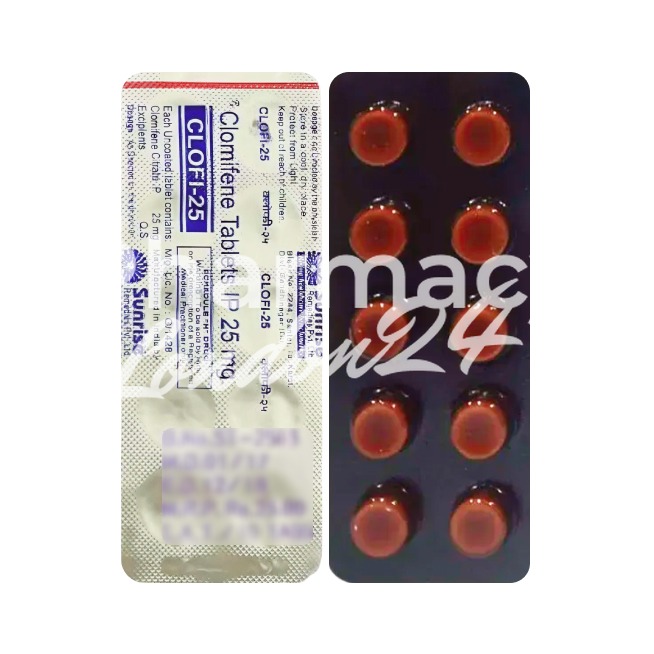
In brief
- Clomid (clomifene) is listed by Pharmacy London24 as 25mg and 50mg tablets in packs of 10 to 360 and 100mg tablets in packs of 10 to 180, with UK delivery in 9–21 days.
- It occupies oestrogen receptors in the brain, so the pituitary senses less oestrogen and secretes more of the hormones that ripen and release an egg, making it a treatment for infertility caused by absent ovulation.
- Only the 50mg strength is UK-licensed, not 25mg or 100mg. A cycle often begins on day 2, and a progesterone blood test in the mid-luteal phase shows whether an egg was released.
- It should be avoided with liver disease, unexplained uterine bleeding or ovarian cysts other than polycystic ovaries, and treatment is limited to a set number of cycles because prolonged use might affect the ovaries.
- Swelling or pain in the lower tummy may signal overstimulated ovaries, and flashing lights or blurred sight need urgent review; around 10% of pregnancies on it are twins. Clomifene is a POM.
Basic Clomid information
- INN (international nonproprietary name): Clomifene
- Brand names available in the United Kingdom: Clomid; generic clomifene
- ATC code: G03GB02
- Forms and dosages: Oral tablets (50 mg)
- Manufacturers in the United Kingdom: Sanofi and generic manufacturers
- Registration status in the United Kingdom: Prescription-only medicine (POM)
- OTC / Rx classification: Prescription-only medicine (POM)
Everyday use and best practices
Taking Clomid involves a few important considerations to enhance efficacy and align with individual lifestyles. Timing and meal interactions are often the focus of patient queries.
Morning vs evening dosing
Choosing the right time to take Clomid—whether in the morning or evening—can depend largely on individual routines and preferences. Many healthcare providers suggest following a consistent dosing schedule to optimise its effects. The key is to pick a specific time each day and stick to it.
Maintaining this consistency helps maintain stable hormone levels, which can positively influence ovulation induction. Setting reminders can assist patients in adhering to their chosen regimen, which is important for maximising the chances of conception.
Taking with or without meals
Whether Clomid is taken with food can also be a source of doubt. Clomid can be taken with or without meals, but taking it with food may help mitigate potential gastrointestinal side effects. Taking it with breakfast or dinner can create a habit that aligns with your daily routine, which helps to adhere to the treatment plan.
Safety priorities
When considering medications like Clomid, it is important to understand who should avoid it and which daily activities might need adjusting.
Who should avoid it
Certain individuals should avoid Clomid due to specific contraindications that could lead to serious health risks. Conditions and scenarios where Clomid use is ill-advised include:
- Known hypersensitivity to clomifene or any of its components.
- Individuals currently pregnant, as the medication could pose risks.
- Those with liver disease or abnormal liver function, which could exacerbate complications.
- Unexplained uterine bleeding that could indicate more severe issues.
- Presence of ovarian cysts not attributed to polycystic ovary syndrome.
- Any hormone-dependent tumours, particularly pituitary-related.
Those with conditions like polycystic ovary syndrome must proceed with caution due to the risk of ovarian hyperstimulation.
Activities to limit
Considering daily activities while on Clomid is crucial, especially when potential side effects can impede normal function. Common side effects include dizziness and unusual visual disturbances, which can significantly affect day-to-day tasks.
To maintain safety, consider the following practical tips:
- Avoid driving if feeling dizzy or experiencing visual disturbances.
- Reassess work responsibilities involving machinery or tasks requiring high focus.
- Inform a supervisor or colleague about medication effects, especially if they impact job performance.
Dosage and adjustments
General regimen
The standard starting dosage for women facing ovulatory failure or anovulation is 50 mg daily. This course typically runs for five consecutive days, usually beginning on the second to fifth day of the menstrual cycle. After this initial cycle, if ovulation does not occur, the dosage may be adjusted up to a maximum of 100 mg per day. Patients may repeat this regimen for up to six cycles. It's important to monitor responses closely and consult a healthcare professional for tailored advice.
Special cases
In patients with comorbid conditions, such as hepatic or renal impairment, it is advisable to avoid Clomid unless under strict medical supervision. In cases of liver disease, the use of Clomid is contraindicated, while renal dysfunction warrants significant caution. Thus, healthcare providers should assess each patient individually, weighing the risks and benefits before initiating treatment.
| City | Region | Delivery time |
|---|---|---|
| London | Greater London | 9–21 days |
| Birmingham | West Midlands | 9–21 days |
| Manchester | Greater Manchester | 9–21 days |
| Glasgow | Scotland | 9–21 days |
| Leeds | West Yorkshire | 9–21 days |
| Sheffield | South Yorkshire | 9–21 days |
| Bristol | South West England | 9–21 days |
| Newcastle upon Tyne | Tyne and Wear | 9–21 days |
| Cardiff | Wales | 9–21 days |
| Nottingham | Nottinghamshire | 9–21 days |
| Southampton | Hampshire | 9–21 days |
| Coventry | West Midlands | 9–21 days |
| Wolverhampton | West Midlands | 9–21 days |
| Brighton | East Sussex | 9–21 days |
| Derby | Derbyshire | 9–21 days |



