
Ciprofloxacin
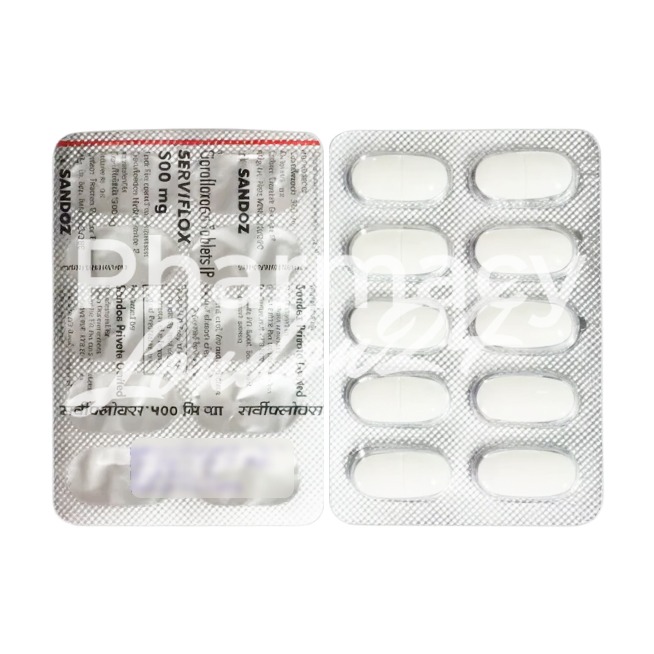
In brief
- In our pharmacy, you can buy ciprofloxacin without a prescription, with delivery in 9–21 days throughout the United Kingdom. Discreet and anonymous packaging.
- Ciprofloxacin is intended for the treatment of various bacterial infections, including urinary tract infections and respiratory infections. The drug acts by inhibiting bacterial DNA gyrase and topoisomerase IV, disrupting DNA replication.
- The usual dosage of ciprofloxacin is 250–750 mg depending on the condition being treated.
- The form of administration is available in tablets, oral suspension and intravenous infusion.
- The effect of the medication begins within 1–2 hours.
- The duration of action is approximately 12 hours.
- It is advisable not to consume alcohol while taking ciprofloxacin.
- The most common side effect is gastrointestinal upset, including nausea and diarrhoea.
- Would you like to try ciprofloxacin without a prescription?
Basic ciprofloxacin information
- International nonproprietary name (INN): Ciprofloxacin
- Brand names available in the United Kingdom: Ciproxin; generic ciprofloxacin
- ATC code: J01MA02
- Forms and dosages: Tablets (250 mg, 500 mg, 750 mg), oral suspension, intravenous infusion, ear drops
- Manufacturers in the United Kingdom: Bayer, various generics
- Registration status in the United Kingdom: Prescription-only medicine (POM)
- OTC / Rx classification: Prescription-only medicine (POM)
Everyday use and best practices
Ciprofloxacin is a powerful antibiotic that deserves careful consideration when integrating it into daily routines. Taking it at consistent times, about 12 hours apart, enhances the effectiveness of this medication. Whether taken in the morning or evening, the key is to maintain a routine. One practical tip is to link ciprofloxacin doses with a recurring daily event, such as having it after breakfast or just before bed.
The choice between morning and evening dosing can depend on individual preferences and lifestyle. Morning dosing may suit those who have a busy day ahead, while evening dosing might be better for those who experience any side effects, as these could disrupt daily activities. Ultimately, the best approach is the one that fits into daily life.
Taking with or without meals
Ciprofloxacin can be taken with or without food. Taking it on an empty stomach usually allows for faster absorption, but it can be taken with a meal if it upsets your stomach.
It is advisable to avoid taking ciprofloxacin on its own with dairy products or calcium-fortified drinks, as they may hinder its absorption. Antacids and iron or zinc supplements should also be taken at least 2 hours apart from ciprofloxacin. Dairy products can still be eaten as part of a normal meal.
Safety priorities
There are specific groups who should avoid this antibiotic due to potential risks associated with its use. For instance, individuals with known allergies to ciprofloxacin or other quinolone antibiotics are strongly advised not to take it.
Who should avoid it (MHRA warnings)
The Medicines and Healthcare products Regulatory Agency (MHRA) advises that fluoroquinolones such as ciprofloxacin are only used when other antibiotics are unsuitable, and that they may not be suitable for the following groups:
- Individuals with a history of hypersensitivity to ciprofloxacin or related antibiotics.
- Those who have experienced tendon disorders linked with fluoroquinolone usage.
- Patients with pre-existing conditions like epilepsy, as ciprofloxacin can increase the risk of seizures.
- Elderly individuals, who might be more susceptible to tendon injuries, need particular caution.
- People with myasthenia gravis, since it may exacerbate muscle weakness.
Stop treatment and seek medical advice if tendon pain or swelling occurs.
Activities to limit (driving, work safety)
Taking ciprofloxacin can impact activities that require full attention, like driving or operating heavy machinery. Side effects such as dizziness, light-headedness or confusion may occur, which could endanger safety.
To manage these potential side effects, consider the following:
- Limit initial activities after starting treatment until you know how ciprofloxacin affects you.
- Consult a healthcare professional if any side effects persist or worsen.
- Do not drive if you feel unwell, and arrange for a responsible adult to assist.
Dosage and adjustments
General regimen (NHS guidance)
Typical adult doses for common conditions are:
- Urinary tract infection: 250–500 mg twice daily for 3–7 days.
- Complicated urinary tract infections: 500–750mg twice daily for 7–14 days.
- Lower respiratory infections: 500–750mg twice daily for 7–14 days.
- Prostatitis: 500–750mg twice daily for 2–4 weeks.
- Gastrointestinal infections: 500mg twice daily for 5–7 days.
- Post-exposure anthrax: 500mg twice daily for 60 days.
Dosing frequency typically involves taking ciprofloxacin every 12 hours, depending on the infection type.
The duration may vary based on the individual’s response and the severity of the condition. Regular follow-ups are crucial to maximise treatment effectiveness.
Special cases (elderly, comorbidities)
Special considerations are necessary for vulnerable populations such as the elderly and those with comorbidities.
For older adults, a lower dose might be required, primarily due to decreased renal function, which can affect drug clearance.
Key recommendations include:
- Monitor renal function closely.
- Consider initial doses of 250mg to prevent excess exposure.
For individuals with kidney impairment, ciprofloxacin dosage adjustment is essential. For those with a creatinine clearance below 30 mL/min, a typical dose might range from 250mg to 500mg every 18–24 hours.
On the other hand, patients with liver conditions generally do not need to adjust their ciprofloxacin dose, unless in severe cases. Regular monitoring remains crucial for managing potential side effects.
| City | Region | Delivery time |
|---|---|---|
| London | London | 9–21 days |
| Birmingham | West Midlands | 9–21 days |
| Manchester | North West | 9–21 days |
| Glasgow | Scotland | 9–21 days |
| Newcastle | North East | 9–21 days |
| Leeds | Yorkshire | 9–21 days |
| Sheffield | Yorkshire | 9–21 days |
| Bradford | Yorkshire | 9–21 days |
| Bristol | South West | 9–21 days |
| Cardiff | Wales | 9–21 days |
| Coventry | West Midlands | 9–21 days |
| Stoke-on-Trent | West Midlands | 9–21 days |
| Norwich | East Anglia | 9–21 days |
| Wolverhampton | West Midlands | 9–21 days |
| Southampton | South East | 9–21 days |



