
Cilostazol
In brief
- In our pharmacy, you can buy cilostazol without a prescription, with delivery in 9–21 days throughout the United Kingdom. Discreet and anonymous packaging.
- Cilostazol is intended for the treatment of intermittent claudication due to peripheral arterial disease. The drug acts as a phosphodiesterase III inhibitor, increasing cAMP in platelets and vessels, which inhibits aggregation and promotes vasodilation.
- The usual dose of cilostazol is 100 mg taken orally twice daily.
- The form of administration is a film-coated tablet.
- The effect of the medication begins gradually and may take up to 12 weeks for full benefit.
- The duration of action is long-term, depending on symptom improvement and under periodic review.
- It is advisable to avoid alcohol while taking cilostazol.
- The most common side effect is headache.
- Would you like to try cilostazol without a prescription?
Basic cilostazol information
- INN (international nonproprietary name): cilostazol
- Brand names available in the United Kingdom: Pletal; generic cilostazol
- ATC code: B01AC23
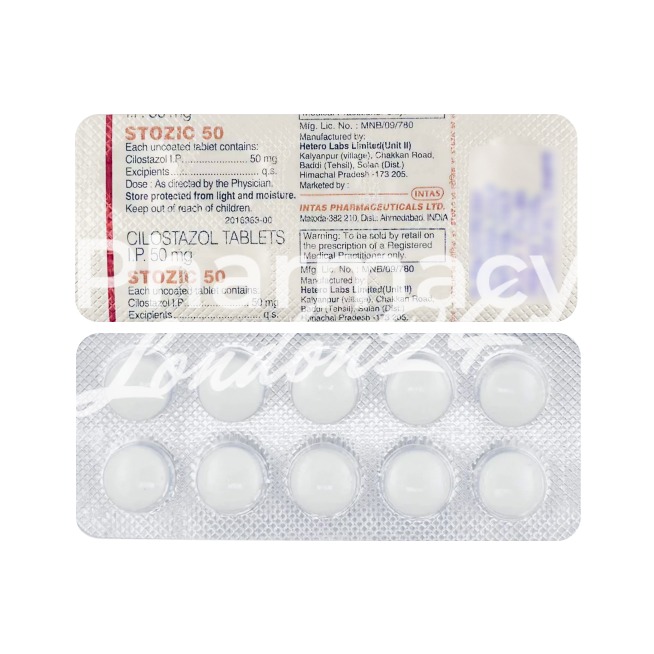
- Forms and dosages: 50 mg and 100 mg tablets
- Manufacturers in the United Kingdom: Otsuka Pharmaceutical and generic manufacturers
- Registration status in the United Kingdom: Licensed by the MHRA; prescription only
- OTC / Rx classification: Prescription-only medicine (POM)
Everyday use and best practices
Cilostazol, typically taken at a dosage of 100 mg twice daily, is best taken consistently at the same times each day. This regularity helps to maintain effective blood levels, ensuring consistent therapeutic effects. Morning and evening doses can work well, but it’s crucial to choose a routine that fits your lifestyle for optimal results.
Taking with or without meals
Cilostazol should be taken at least 30 minutes before, or two hours after, breakfast and the evening meal, because food increases the amount of the medicine absorbed and can make side effects more likely.
Safety priorities
Who should avoid it (MHRA warnings)
There are specific individuals who should avoid cilostazol to prevent severe health risks. These include:
- Congestive heart failure (any grade)
- Severe hepatic impairment
- Severe renal impairment
- Known allergies to cilostazol or excipients
- Active bleeding conditions, such as peptic ulcers
- Unstable angina, or a recent heart attack or heart procedure
Activities to limit (driving, work safety)
Patients taking cilostazol may experience side effects such as dizziness or palpitations, which could impair activities like driving or operating machinery. It is advisable for patients to stay mindful of how they feel before engaging in such activities. Inform your employer of your medication use, especially in safety-sensitive jobs, to ensure you can manage any risks appropriately.
Dosage and adjustments
General regimen (NHS guidance)
The NHS generally prescribes cilostazol at 100 mg taken orally twice a day. It’s vital to adhere to healthcare provider recommendations and attend periodic reviews to monitor the drug's effectiveness and adjust dosages if necessary. Remember, a healthcare provider should continuously evaluate and adapt treatment to maximise benefits and minimise risks.
Special cases (elderly, comorbidities)
When prescribing cilostazol for older patients or those with additional health conditions, healthcare providers typically consider potential sensitivity to the medication. Adjustments may be needed, and careful monitoring is essential. Patients with comorbidities must regularly consult their healthcare providers to assess risks and adapt their dosage accordingly.
What’s inside and how it works
Ingredients overview
The active ingredient in Cilostazol is the phosphodiesterase III inhibitor, which brings therapeutic benefits primarily through vasodilation and antiplatelet effects. Each tablet contains 100 mg of cilostazol (50 mg tablets are also available), with excipients that aid in tablet stability.
Mechanism basics explained simply
Understanding how Cilostazol works can be simplified with a straightforward analogy. Think of blood vessels like garden hoses. Cilostazol acts to keep these hoses open and flowing by blocking certain enzymes (phosphodiesterase III). This action increases a molecule called cAMP, which stops platelets from clumping together. Just as a garden hose must be free from blockages for water to flow smoothly, Cilostazol helps blood flow freely to alleviate issues such as intermittent claudication.
Main indications
Approved uses
Cilostazol is licensed by the MHRA for treating intermittent claudication in patients without rest pain and without evidence of peripheral tissue necrosis. This condition is characterised by pain and discomfort in the legs due to insufficient blood flow during physical activity. By improving blood circulation, Cilostazol aids in walking capacity and overall mobility.
Off-label uses in UK clinics
While Cilostazol is mainly prescribed for specific indications, some healthcare professionals may consider off-label uses. Patient safety must remain paramount, and any off-label use should be closely monitored to mitigate potential risks.
Interaction warnings
Food interactions
Cilostazol is best taken away from meals (see above). Grapefruit juice can raise cilostazol levels and should be avoided. Patients should also be cautious of alcohol intake, as it may increase the risk of side effects. Additionally, high caffeine consumption from tea or coffee might lead to increased heart rate or palpitations.
Drug conflicts
Cilostazol can interact with other medicines, for example omeprazole, certain antibiotics and antifungals, and medicines that affect blood clotting. Patients on multiple prescriptions should have regular medication reviews with their healthcare provider to identify any risks. Combining medications, especially those that also affect blood clotting or pressure, can require careful management to avoid complications.
Alternative choices
When considering alternatives to Cilostazol, several options are available through the NHS, each with their own pros and cons:
- Naftidrofuryl oxalate
- Pros: Licensed for the symptomatic relief of intermittent claudication.
- Cons: Can cause nausea and abdominal pain; taken three times a day.
- Supervised exercise programme
- Pros: Improves walking distance without medication.
- Cons: Needs commitment and access to a local programme.
- Clopidogrel or aspirin
- Pros: Reduce the risk of heart attack and stroke in peripheral arterial disease.
- Cons: Do not relieve claudication symptoms; bleeding risk.
Ultimately, the choice of medication should be tailored to the severity of the condition and individual patient profiles.
Regulation snapshot
Cilostazol is licensed by the MHRA and is a prescription-only medicine (POM) in the UK. Healthcare professionals follow the NHS prescribing framework, which emphasises patient monitoring and risk assessment before initiating treatment.
Frequently asked questions
Can I buy cilostazol over the counter?
No. In the UK cilostazol is a prescription-only medicine. Consult your healthcare provider for the best course of action.
What are the main side effects of Cilostazol?
The most common side effects include headache, diarrhoea, and mild palpitations. These effects are usually mild but should be monitored.
How long does it take for Cilostazol to work?
Patients may start to notice improvements in walking distance after several weeks, with full benefits typically realised within 12 weeks.
Is Cilostazol suitable for everyone?
Not everyone can take Cilostazol, especially those with congestive heart failure or significant hepatic or renal impairment. Always discuss your medical history with a healthcare professional.
Guidelines for proper use
When patients seek advice on Cilostazol, it’s essential for pharmacists to adopt a clear counselling style. Expect discussions around the drug’s proper usage, including:
- Dosage instructions—100 mg taken twice daily.
- Importance of taking the medication at least 30 minutes before, or two hours after, meals.
- Potential side effects and the importance of reporting any unusual symptoms.
For additional support, NHS resources such as patient leaflets can be helpful in guiding patients through their treatment.



