
Betamethasone Clotrimazole
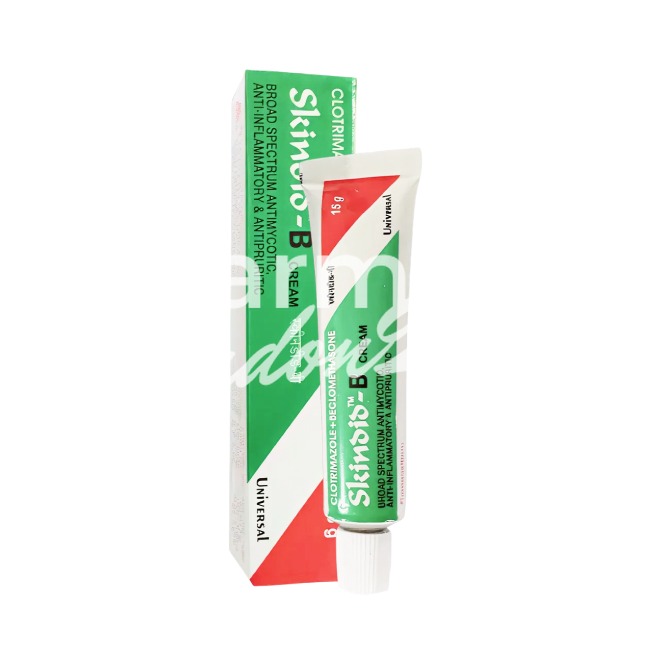
In brief
- In our pharmacy, you can buy Betamethasone clotrimazole, with delivery in 9–21 days throughout the United Kingdom. Discreet and anonymous packaging.
- Betamethasone clotrimazole is intended for the treatment of fungal skin infections such as tinea pedis, tinea cruris, and tinea corporis. The drug combines an antifungal agent, clotrimazole, which disrupts fungal cell membranes, with betamethasone dipropionate, a corticosteroid that suppresses local inflammation and itching.
- The usual dosage for tinea cruris and tinea corporis is to apply a thin layer to the affected area twice daily for 2 weeks, while for tinea pedis, apply twice daily for up to 4 weeks.
- The form of administration is a topical cream.
- The effect of the medication begins within hours of application.
- The duration of action varies, but it is generally effective for the duration of treatment based on the applied frequency.
- The most common side effect is mild skin irritation, such as burning or itching.
- Would you like to try Betamethasone clotrimazole?
Basic betamethasone clotrimazole information
- INN (international nonproprietary name): Betamethasone and Clotrimazole (often as betamethasone dipropionate + clotrimazole)
- Brand names available in the United Kingdom: Lotriderm
- ATC code: D07XC01 (betamethasone, combinations)
- Forms and dosages: Cream (1% Clotrimazole, 0.05% Betamethasone)
- Manufacturers in the United Kingdom: Organon (Lotriderm)
- Registration status in the United Kingdom: Licensed by the MHRA; prescription only
- OTC / Rx classification: Prescription-only medicine (POM)
Everyday use and best practices
When using betamethasone clotrimazole, timing and consistency are key to achieving the best results. The medication is usually recommended to be applied twice daily, ideally once in the morning and once in the evening. This routine fits conveniently into the daily lives of most patients in the UK, allowing them to incorporate their treatment without disruption. It’s vital to stick to this schedule for maximum effectiveness.
Remember, consistency is crucial. Skipping applications can reduce the medication's overall effectiveness. Establishing a morning and evening routine can serve as a helpful reminder to apply your treatment as prescribed. For instance, applying it during your regular personal care activities can facilitate adherence.
Taking with or without meals
While there are no specific dietary restrictions when using betamethasone clotrimazole, incorporating the medication into meal routines can simplify the process. It is essential to ensure the area of application is clean and dry, regardless of whether it’s before or after meals.
Apply the cream after washing and drying your hands and the affected area, and wash your hands again afterwards. Using a reminder system, such as smartphone alerts, can help with applying it at the right times.
What’s inside and how it works
Betamethasone clotrimazole combines two powerful ingredients designed to tackle a variety of skin conditions. The formulation includes:
- Betamethasone dipropionate: a potent topical corticosteroid that alleviates inflammation and reduces itching.
- Clotrimazole: an effective antifungal agent that disrupts fungal cell membranes, specifically targeting the synthesis of ergosterol.
These ingredients work together effectively in treating skin conditions such as tinea pedis (athlete's foot), tinea cruris (jock itch), and tinea corporis (ringworm), providing relief from discomfort and promoting healing.
Mechanism basics explained simply
Understanding how betamethasone and clotrimazole work can demystify their effectiveness.
Clotrimazole: targets fungi by inhibiting ergosterol production, crucial for maintaining fungal cell integrity. Without ergosterol, fungi can't thrive and are eliminated from the affected area.
Betamethasone: acts by reducing inflammation and suppressing the body's immune response in the affected region. This helps ease redness, itching, and swelling, allowing skin healing to occur more swiftly.
Main indications
Approved uses (MHRA listing)
Betamethasone with clotrimazole cream is licensed in the UK for corticosteroid-responsive skin conditions complicated by fungal infection, including:
- Tinea pedis: Characterised by itching, burning, and skin peeling between the toes.
- Tinea cruris: Often seen in the groin area, presents as a red, itchy rash.
- Tinea corporis: Commonly known as ringworm, manifests as a circular, red, itchy patch with clear skin in the middle.
Off-label uses in UK clinics
Use outside the licensed indications should always be directed and monitored by a healthcare professional.
Interaction warnings
Food interactions (alcohol, tea/coffee)
Betamethasone clotrimazole is applied to the skin, and food, alcohol, tea and coffee are not known to interact with it.
Drug conflicts
Interactions are uncommon with topical use, but it is important to tell your doctor or pharmacist about all the medicines you use, including other skin treatments. A healthcare professional can guide patients through identifying such risks and suggest strategies for mitigating them.
Alternative choices
Patients seeking alternatives to betamethasone clotrimazole often have valid concerns. Thankfully, the NHS provides several options that can also address skin infections and inflammation.
Consider these alternatives:
- Daktacort (miconazole + hydrocortisone): Effective for fungal infections with anti-inflammatory properties, but may take longer to see results.
- Canesten HC (clotrimazole + hydrocortisone): Combines antifungal and corticosteroid but can cause skin thinning with extended use.
- Fucibet (fusidic acid + betamethasone): Good for bacterial infections, offering rapid relief but possibly leading to antibiotic resistance if misused.
When discussing alternatives with healthcare providers, patients should consider:
- Specific condition requiring treatment.
- Potential side effects of alternatives.
- Duration of treatment and effectiveness.
- Personal medical history, including allergies.
Regulation snapshot
In the UK, betamethasone clotrimazole is a prescription-only medicine (POM), licensed by the Medicines and Healthcare products Regulatory Agency (MHRA).
This dual-action topical product fits well into the NHS prescribing framework, aimed mainly at treating infections like tinea and some inflammatory conditions.
It is available on prescription throughout England, Scotland, Wales and Northern Ireland.
Frequently asked questions
Here are some common questions about betamethasone clotrimazole:
- How do I use the cream? Apply a thin layer to the affected area twice daily for the prescribed duration.
- Is it available without a prescription? No. In the UK betamethasone clotrimazole is a prescription-only medicine.
- What are the side effects? Common side effects include skin irritation, burning, or stinging sensations. Rarely, systemic effects like Cushing's syndrome can occur with prolonged use.
- Is it safe during pregnancy? It's crucial to balance potential risks; always consult your doctor before using betamethasone clotrimazole during pregnancy.
Guidelines for proper use
UK pharmacist counselling style
When consulting with a pharmacist about betamethasone clotrimazole, expect clear guidance on its use:
- Explanation of how the medication works—combining antifungal and corticosteroid properties.
- Instructions on dosage and application frequency.
- Advice on potential side effects and when to seek further medical attention.
Printed materials, such as patient information leaflets, often accompany these discussions to help reinforce the guidance provided during consultations.
NHS patient support advice
The NHS offers various resources for those needing additional information or support related to betamethasone clotrimazole:
- NHS websites provide comprehensive overviews of medications.
- Helplines are available for patients needing immediate advice.
- Local pharmacies can often provide printed materials about your treatment.
Adherence to professional guidelines ensures that patients use betamethasone clotrimazole safely and effectively, minimising the risks associated with its use.
| City | Region | Delivery Time |
|---|---|---|
| London | Greater London | 9–21 days |
| Birmingham | West Midlands | 9–21 days |
| Manchester | Greater Manchester | 9–21 days |
| Leeds | West Yorkshire | 9–21 days |
| Glasgow | Scotland | 9–21 days |
| Sheffield | South Yorkshire | 9–21 days |
| Bristol | South West | 9–21 days |
| Newcastle | Tyne and Wear | 9–21 days |
| Cardiff | Wales | 9–21 days |
| Coventry | West Midlands | 9–21 days |
| Stoke-on-Trent | Staffordshire | 9–21 days |
| Southampton | Hampshire | 9–21 days |
| Plymouth | Devon | 9–21 days |
| Nottingham | East Midlands | 9–21 days |
| Derby | East Midlands | 9–21 days |



