
Antabuse
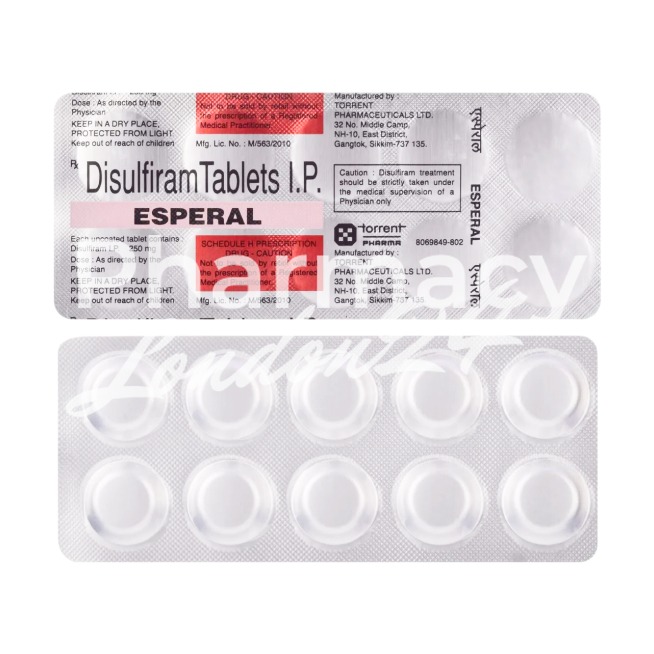
In brief
- In our pharmacy, you can buy Antabuse without a prescription, with delivery in 9–21 days throughout the United Kingdom. Discreet and anonymous packaging.
- Antabuse is used for the treatment of alcohol dependence. The drug functions as a deterrent by inhibiting the enzyme aldehyde dehydrogenase, leading to unpleasant reactions when alcohol is consumed.
- The usual UK regimen is 800 mg on the first day, reduced over 5 days to a maintenance dose of 100–200 mg once daily.
- The form of administration is a 200 mg tablet.
- The duration of action lasts for up to 2 weeks after the last dose, especially in relation to unpleasant reactions with alcohol.
- Do not consume alcohol; reactions can be severe and life-threatening.
- The most common side effect is drowsiness.
- Would you like to try Antabuse without a prescription?
Basic Antabuse information
- INN (international nonproprietary name): Disulfiram
- Brand names available in the United Kingdom: Antabuse
- ATC code: N07BB01
- Forms and dosages: Tablets 200 mg
- Registration status in the United Kingdom: Prescription-only medicine (POM)
- OTC / Rx classification: Prescription-only medicine (POM)
Everyday use and best practices
Antabuse is used in the management of alcohol dependence and is taken once daily. Some people prefer morning doses, others find evening dosing more practical, but whatever the time chosen, consistency is key. Taking it at the same time each day helps to establish a routine.
Morning vs evening dosing
Morning or evening dosing is a matter of individual preference. Missing doses can lead to setbacks, so find a routine that works for you and stick to it.
Taking with or without meals
Antabuse can be taken with or without food. Taking it with a meal may help if it causes stomach upset. Be mindful that foods and products containing alcohol (such as some sauces) can cause adverse reactions.
Safety priorities
It's essential for potential users to understand when to avoid Antabuse to prevent dangerous side effects. Individuals with severe liver impairment, or those who have consumed alcohol within the last 24 hours, should not use this medication, to prevent serious reactions. Full disclosure of one’s medical history to healthcare professionals is vital for safe prescribing and effective treatment.
Who should avoid it
In addition to liver issues, people with serious heart conditions or severe psychiatric disorders should avoid Antabuse. Similarly, those who are allergic to disulfiram or are pregnant should not take it.
Activities to limit
Patients taking Antabuse should also be cautious regarding activities that could pose risks due to potential side effects like drowsiness or dizziness. Operating machinery or driving may be affected. It's advisable to evaluate how one feels after taking Antabuse before engaging in such activities.
Dosage and adjustments
The usual UK regimen is 800 mg on the first day, reduced over 5 days to a maintenance dose of 100–200 mg once daily. Adjustments may be needed based on the patient’s progress and side effects. Regular follow-ups with a healthcare provider are key.
General regimen
Treatment starts with a higher initial dose, which is then reduced to a maintenance dose. Further adjustments depend on the patient’s progress, in line with NHS guidance.
Special cases
Caution is warranted for specific populations, including the elderly or those with comorbidities such as liver or kidney conditions. Recommendations often suggest starting slow, with lower dosages, while ensuring close monitoring. Key factors such as age, overall health, and concurrent medications can affect the medication’s effectiveness and safety. Continuous dialogue with healthcare practitioners can help navigate these complexities.
What’s inside and how it works
Ingredients overview
Antabuse contains the active ingredient disulfiram and is available as 200 mg tablets in the UK. Disulfiram disrupts the metabolism of alcohol, discouraging consumption. The tablets also contain inactive ingredients (excipients), which are listed in the patient information leaflet.
Mechanism basics explained simply
Disulfiram works by interfering with how the body processes alcohol. When someone consumes alcohol while on Antabuse, disulfiram blocks the enzyme aldehyde dehydrogenase, leading to a buildup of acetaldehyde in the bloodstream. This substance causes unpleasant reactions such as flushing, nausea, and palpitations—essentially making drinking uncomfortable and reinforcing the decision to abstain from alcohol. By creating an aversion to drinking, Antabuse aims to support individuals battling alcohol dependency in breaking the cycle of addiction.
Main indications
Approved uses (MHRA listing)
Antabuse is indicated as an adjunct in the management of alcohol dependence. It is recommended for patients who are motivated to stop drinking and have abstained from alcohol for at least 12 hours before starting treatment. It is intended to be part of a comprehensive treatment plan, including counselling and support.
Off-label uses in UK clinics
Any use outside the licensed indication is a specialist decision, taken after a discussion of the benefits and risks.
Interaction warnings
Food interactions (alcohol, tea/coffee)
While taking Antabuse, certain food and drink restrictions are crucial for safety. Alcohol, unsurprisingly, should be entirely avoided, as even a small amount can lead to severe reactions. Hidden sources of alcohol, like sauces that contain alcohol, must also be avoided. Medicines, mouthwashes and toiletries that contain alcohol should also be avoided. Patients should consult their pharmacist or prescriber for a complete list of products to avoid while using Antabuse.
Drug conflicts
Care must be taken if combining disulfiram with other medicines, such as phenytoin, warfarin or certain antidepressants, which could heighten risks of adverse reactions. For example, the combination of disulfiram and metronidazole is especially risky. Therefore, it’s strongly advised to consult healthcare providers before starting Antabuse to discuss current prescriptions and potential drug interactions.
Alternative choices
NHS prescribing alternatives
- Naltrexone: Reduces cravings but may cause nausea.
- Acamprosate: Aids abstinence by modulating neurotransmitters; may have gastrointestinal side effects.
- Topiramate: Off-label anti-craving medication; potential cognitive side effects.
Each alternative presents unique benefits and challenges, depending on individual patient needs and medical history. Consulting with a healthcare provider can guide the choice best suited to support recovery efforts.
| City | Region | Delivery time |
|---|---|---|
| London | Greater London | 9–21 days |
| Birmingham | West Midlands | 9–21 days |
| Manchester | Greater Manchester | 9–21 days |
| Glasgow | Scotland | 9–21 days |
| Leeds | West Yorkshire | 9–21 days |
| Sheffield | South Yorkshire | 9–21 days |
| Bristol | South West England | 9–21 days |
| Newcastle | Tyne and Wear | 9–21 days |
| Nottingham | East Midlands | 9–21 days |
| Coventry | West Midlands | 9–21 days |
| Bradford | West Yorkshire | 9–21 days |
| Cardiff | Wales | 9–21 days |
| Stoke-on-Trent | Staffordshire | 9–21 days |



