
Anafranil
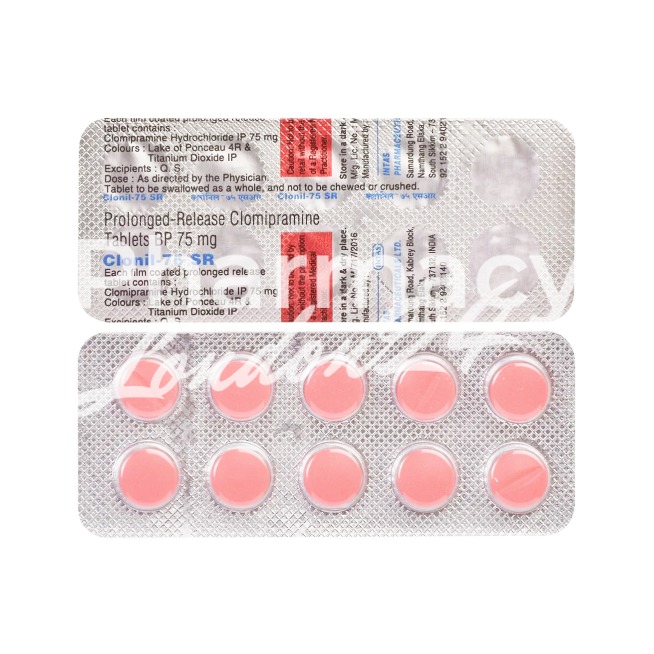
In brief
- Anafranil is a prescription-only medicine (POM) in the UK.
- Anafranil is used for the treatment of obsessive-compulsive disorder (OCD) and some depressive disorders. It works as a tricyclic antidepressant by inhibiting the reuptake of serotonin and noradrenaline in the brain.
- The usual dose of Anafranil for adults with OCD starts at 25 mg/day, and the maintenance dose is up to 100–250 mg/day.
- The form of administration is a capsule.
- The effect of the medication typically begins within 2–3 weeks after starting treatment.
- The duration of action is approximately 24 hours.
- It is advised to avoid alcohol consumption while taking Anafranil.
- The most common side effect is drowsiness.
- Would you like to try Anafranil without a prescription?
Basic Anafranil information
- INN (international nonproprietary name): Clomipramine
- Brand names available in the United Kingdom: Anafranil
- ATC code: N06AA04
- Forms and dosages: Capsules 10 mg, 25 mg and 50 mg
- Manufacturers in the United Kingdom: Anafranil and generic clomipramine are supplied by several manufacturers
- Registration status in the United Kingdom: Prescription-only medicine (POM)
- OTC / Rx classification: Prescription-only medicine (POM)
Everyday use and best practices
When considering the use of Anafranil, understanding the best practices for dosing is crucial for maximising its benefits while minimising side effects. Patients often wonder when to take this medication for optimal results and comfort.
Morning vs evening dosing
Anafranil is often taken as a single dose at bedtime, because of the sedative properties of clomipramine, which can cause drowsiness if taken during the day. Evening dosing can help to reduce daytime sleepiness. It is important to adjust timing according to individual response, so ask your prescriber or pharmacist for advice.
Taking with or without meals
Anafranil capsules can be taken with or without food. Taking them with food may help to reduce nausea. Whichever you choose, take them consistently, and discuss any concerns about food interactions with a healthcare professional.
What’s inside and how it works
Anafranil contains clomipramine as its active ingredient, which is a tricyclic antidepressant. This medication also includes various inactive components, which are essential for the overall formulation but do not directly impact the therapeutic effects.
Ingredients overview
The key ingredients of Anafranil are:
- Active ingredient: Clomipramine
- Inactive ingredients: Excipients may include lactose, starch, and other additives to ensure stability and absorption.
Mechanism basics explained simply
Anafranil primarily works by increasing the levels of neurotransmitters in the brain, particularly serotonin, which plays a critical role in mood regulation. By blocking the reuptake of serotonin, clomipramine helps improve the symptoms of obsessive-compulsive disorder (OCD) and depressive disorders.
Its use should be carefully monitored because of potential side effects.
Main indications
Approved uses (MHRA listing)
Clomipramine (Anafranil) is licensed in the UK for:
- Depressive illness
- Obsessional and phobic states
- Cataplexy associated with narcolepsy (as an adjunct)
Off-label uses in UK clinics
Anafranil is sometimes prescribed off-label for other conditions, such as:
- Panic disorder
- Chronic pain management
- General anxiety disorder
Interaction warnings
While using Anafranil, it’s essential to be aware of potential interactions, both from dietary components and other medications.
Food interactions (alcohol, tea/coffee)
Alcohol can enhance the sedative effects of Anafranil and lead to increased drowsiness, so it is best avoided.
Drug conflicts
Known drug interactions for Anafranil include:
- Monoamine oxidase inhibitors (MAOIs)
- Other antidepressants (particularly SSRIs)
- Certain medications for heart conditions
Consulting healthcare professionals regarding any pre-existing medications is crucial to prevent adverse interactions and ensure safe treatment.
Alternative choices
For patients unable to tolerate or unresponsive to Anafranil, the NHS provides several alternatives. Some notable alternatives with their pros and cons are:
| Medication | Pros | Cons |
|---|---|---|
| Sertraline | Less sedating, favourable side effect profile | May take longer to notice effects |
| Fluoxetine | Well-researched, suitable for long-term use | Possible weight loss, but not guaranteed |
| Paroxetine | Effective for anxiety and OCD | Higher withdrawal symptoms than others |
Regulation snapshot
Anafranil, the brand name for clomipramine, is a prescription-only medicine (POM) in the UK. It is a tricyclic antidepressant, which necessitates careful use because of its side effect profile.
Within the NHS prescribing framework, clomipramine is recommended when SSRIs have proven ineffective. Prescribers must evaluate each patient’s individual circumstances, considering their medical history and potential interactions with other medications to facilitate safe and effective usage.
Frequently asked questions
Is Anafranil effective for anxiety disorders?
Anafranil is primarily used for OCD and depression but is also sometimes prescribed off-label for anxiety disorders.
What should I do if I miss a dose of Anafranil?
If a dose is missed, take it as soon as you remember, unless it’s close to the time for your next dose. Do not double up to compensate.
Can Anafranil interact with other medications?
Yes, it's crucial to inform healthcare providers about all other medications being taken, as interactions can lead to serious side effects.
What is the standard Anafranil dosage for OCD?
Typically, treatment starts with 25 mg daily, which is gradually increased over about two weeks to 100 mg daily, up to a maximum of 250 mg daily, based on response and tolerance.
Guidelines for proper use
UK pharmacist counselling style
Pharmacists play a vital role in the education of patients prescribed Anafranil. They should discuss potential side effects, proper dosage, and the necessity of adhering to prescribed regimens. This dialogue enhances understanding and adherence, ultimately leading to better health outcomes.
NHS patient support advice
For those experiencing difficulties with Anafranil treatment, the NHS provides resources, including support groups and counselling services. Access to mental health professionals is encouraged for additional support.



